Tips · Japan
Where Should You Go for a Winter Onsen Trip in Japan?
Which Japanese city suits a winter hot-spring trip? Onsen towns in our city guides, how to reach them, bathing etiquette and December-February normals.

Published
Guide cities with hot springs at a glance
A hot soak is especially welcome on a cold winter trip. This article gathers only the Japanese cities whose guides feature hot springs: which onsen towns they have, how to get there from the city, and what December-February weather is normally like. Everything is based on the city guides and Japan Meteorological Agency normals.
They fall into three regions: snowy Hokkaido (Sapporo, Otaru, Hakodate), Honshu and Shikoku with onsen towns close to the city (Sendai, Kobe, Matsuyama), and Kyushu, packed with hot-spring areas (Beppu & Yufuin, Kumamoto, Kagoshima).
- Sapporo: Jozankei hot springs (known for onsen ryokan; a nearby overnight)
- Otaru: Asarigawa Onsen (a mountain valley south of the city)
- Hakodate: Yunokawa Onsen (a seaside hot-spring town reached by tram)
- Sendai: Akiu Onsen and Sakunami Onsen
- Kobe: Arima Onsen
- Matsuyama: Dogo Onsen
- Beppu & Yufuin: Kannawa Onsen, Myoban Onsen and the Yufuin hot-spring village
- Kumamoto: Kurokawa Onsen
- Kagoshima: Ibusuki sand baths and Kirishima Onsen
Hokkaido: Sapporo, Otaru and Hakodate
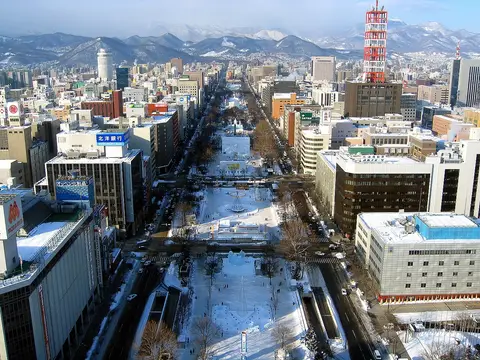
The Sapporo guide describes Jozankei as known for onsen ryokan, with many travelers staying a night, and its itinerary adds the Jozankei hot springs in winter. The guide does not give transport to Jozankei, so check locally.
Otaru, 30-40 minutes by train from Sapporo, has Asarigawa Onsen in a mountain valley south of the city. It is reachable by bus from Otaru Station; check the official timetable. In February, the Otaru Snow Light Path festival lights the canal and an old railway line with snow candles. The guide lists February 6-13 for 2027, so always check the official schedule.
Hakodate's Yunokawa Onsen is a seaside hot-spring town reached by tram from downtown. Tram fares are about ¥210-260 by distance, and a one-day pass is available. There is a free footbath in front of the tram stop, and the guide's itinerary visits it in the afternoon after Goryokaku Park.

- Sapporo: from December to March sidewalks are icy and very slippery, so wear shoes with good grip; if you've never driven on snow, use trains or bus tours instead of a winter rental car
- Otaru: winters bring heavy snow and icy streets, and some facilities close or change hours in winter
- Hakodate: winter brings snow and icy streets, and Motomachi's slopes are steep and slippery. The Mt. Hakodate road closes to vehicles in winter, so use the ropeway or buses
Honshu and Shikoku: Sendai, Kobe and Matsuyama
The Sendai guide features two hot-spring villages close to the city. Akiu Onsen, known as Sendai's retreat, is about 50 minutes by bus from Sendai Station; for Sakunami Onsen, ride the JR Senzan Line about 40 minutes and change to a bus. As in the guide's itinerary, you can stop at Sakunami on the way back from Yamadera on the Senzan Line, or spend a night at Akiu. In winter, Yamadera's stone steps and the surrounding mountains can be snowy and icy, so wear non-slip shoes.
Kobe's Arima Onsen, over the mountains, is one of Japan's oldest hot-spring towns and is famous for its iron-rich reddish water. It is 30 minutes to an hour from the city by bus or train, and day-use bathhouses make a day trip easy, though it is also ideal for a ryokan night. The guide's itinerary spends a day or a night at Arima, then moves on to Osaka or the airport.
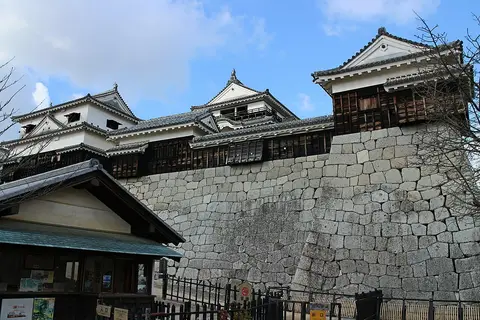
Matsuyama's Dogo Onsen is one of Japan's oldest hot springs: a hot-spring town of ryokan and shopping arcades around a historic wooden public bath. Limousine buses from Matsuyama Airport take about 40 minutes, and from the city you can ride the streetcar or the Botchan Train, a sightseeing train that runs on set days. The public bath is busy in the evening, so early morning or early afternoon is quieter. Ehime grows citrus, and mandarins are in season in winter.

Kyushu: Beppu & Yufuin, Kumamoto and Kagoshima
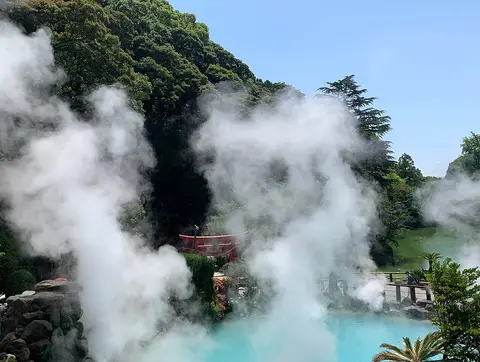
Beppu is an onsen city where steam rises all over town. Kannawa Onsen is a hot-spring quarter with steam rising from every lane, close to most of the Hells, where vegetables, eggs and seafood are steamed over hot-spring vents. On the hillside, Myoban Onsen still has thatched huts that produce yunohana mineral flakes. Both are reached by bus from Beppu Station, and a historic city-run bath within walking distance of the station offers sand baths (no reservations, so you may have to wait).
Yufuin is a quiet hot-spring village beneath Mount Yufu. Lake Kinrin, fed by hot-spring water, is famous for its mist on early winter mornings. The route bus from Beppu Station takes about 50 minutes. From Fukuoka, the Limited Express Sonic runs from Hakata Station to Beppu in about 2 hours, and the Yufuin no Mori sightseeing train (set operating days; the Limited Express Yufu runs when it doesn't) reaches Yufuin in about 2 hours 15 minutes. The Fukuoka guide also suggests Yufuin or Beppu as a day trip and recommends starting early.
Kumamoto's Kurokawa Onsen is a mountain hot-spring village of ryokan along a river, known for its bath-hopping pass (check official information for prices and baths). It is easiest by car, and the guide suggests renting a car at the airport if you head straight to Aso or Kurokawa. Kagoshima has the Ibusuki sand baths, where you are buried in warm beach sand (about an hour from the city by train or car), and Kirishima Onsen, mountain hot-spring villages near the airport. A bus from the airport reaches Kirishima Onsen in about 40 minutes to 1 hour (about 1,000 JPY), making it good for the first or last night.


- Flying into Oita Airport: airport buses take about 53 min to Beppu Station (about 1,600 JPY) and about 55 min to Yufuin Station (about 2,000 JPY)
- Beppu & Yufuin: mountain roads can be icy in winter. Mount Tsurumi, reached by the Beppu Ropeway, has frost-covered trees in winter (hours vary by season)
- Kumamoto: winter brings snow and icy roads to the Aso highlands, so check whether your rental car has winter tires
- Kagoshima: public transport to Ibusuki, Chiran and Kirishima is infrequent. The guide describes Kagoshima's winters as relatively mild
December to February normals by city
These are 1991–2020 normals from the Japan Meteorological Agency at each city's station (Yufuin station for Beppu & Yufuin). They are not readings from the onsen towns themselves, and they are rounded to whole numbers. Each entry shows high/low, then precipitation.
In all three Hokkaido cities, lows stay below freezing for all three months and highs are only 0-3°C. Lows are below freezing in January and February in Sendai, and in all three months in Yufuin. Even Kagoshima, the warmest of these, has highs of just 13-15°C, so wrap up warmly after a bath.
- Sapporo (Sapporo station): Dec 2/-4°C, 115 mm; Jan 0/-6°C, 108 mm; Feb 0/-6°C, 92 mm
- Otaru (Otaru station): Dec 2/-4°C, 152 mm; Jan 0/-6°C, 138 mm; Feb 0/-6°C, 107 mm
- Hakodate (Hakodate station): Dec 3/-4°C, 95 mm; Jan 1/-6°C, 77 mm; Feb 2/-6°C, 65 mm
- Sendai (Sendai station): Dec 8/1°C, 44 mm; Jan 6/-1°C, 42 mm; Feb 7/-1°C, 34 mm
- Kobe (Kobe station): Dec 12/6°C, 49 mm; Jan 9/3°C, 38 mm; Feb 10/3°C, 56 mm
- Matsuyama (Matsuyama station): Dec 13/5°C, 62 mm; Jan 10/3°C, 51 mm; Feb 11/3°C, 66 mm
- Beppu & Yufuin (Yufuin station): Dec 10/-1°C, 55 mm; Jan 7/-2°C, 59 mm; Feb 9/-2°C, 76 mm
- Kumamoto (Kumamoto station): Dec 13/3°C, 61 mm; Jan 11/2°C, 57 mm; Feb 12/3°C, 83 mm
- Kagoshima (Kagoshima station): Dec 15/7°C, 93 mm; Jan 13/5°C, 78 mm; Feb 15/6°C, 113 mm
Onsen etiquette and what to check before you go
The etiquette in the guides is simple: wash before entering the bath, and keep your towel out of the water. Some facilities restrict guests with tattoos, so check in advance.
Winter transport differs by region. Some guides, like Sapporo's, say to skip a rental car if you've never driven on snow, while places such as Kurokawa, Ibusuki and Kirishima are easiest by car. If you rent a car, Japan drives on the left and you need an International Driving Permit; in mountain areas, check whether the car has winter tires. Japan's entry requirements can change, so check official information before you travel.
- Upscale budgets with an onsen ryokan (per person per day, from the guides): Sapporo and Hakodate about 45,000 JPY+; Beppu & Yufuin, Kobe and Otaru about 40,000 JPY+; Sendai, Matsuyama, Kumamoto and Kagoshima about 35,000 JPY+
- Mid-range budgets that include hot-spring entry: Matsuyama and Kagoshima about 14,000-20,000 JPY; Beppu & Yufuin about 15,000-22,000 JPY (onsen hotel)
- Book early for hot-spring lodgings on the outskirts of Yufuin and for Kurokawa
- Check official information for the dates of the Sapporo winter festival, the Jozenji-dori illuminations in Sendai and Hakodate's Christmas Fantasy
Plan your Beppu & Yufuin trip
We never take payment — compare, then book on the official partner site.
Plan your Matsuyama trip
We never take payment — compare, then book on the official partner site.
Full Beppu & Yufuin travel guide →
FAQ
Can I use hot springs if I have tattoos?
The guides note that some facilities restrict guests with tattoos. Rules differ by facility, so check in advance.
Which hot springs are easy to visit from the city?
Hakodate's Yunokawa Onsen is a tram ride away, Kobe's Arima Onsen is 30 minutes to an hour by bus or train, and Sendai's Akiu Onsen is about 50 minutes by bus. Matsuyama's Dogo Onsen is reached by streetcar. From Fukuoka, Yufuin and Beppu are about 2 hours away, so start early.
What does a night at an onsen ryokan cost?
The guides' upscale daily budgets per person are about 45,000 JPY+ in Sapporo and Hakodate, about 40,000 JPY+ in Beppu & Yufuin, Kobe and Otaru, and about 35,000 JPY+ in Sendai, Matsuyama, Kumamoto and Kagoshima.
Is it OK to drive to hot springs in winter?
Kurokawa, Ibusuki and Kirishima are easiest by car, but the Aso highlands get snow and ice in winter, so check for winter tires. The Sapporo guide suggests trains or bus tours instead of a winter rental car if you've never driven on snow. Japan drives on the left, and you need an International Driving Permit.
Related reading
 Itinerary · JapanFirst time in Beppu & Yufuin: getting there from the airport, and how many days do you need?Fukuoka Airport to Beppu and Yufuin by Sonic, Yufuin no Mori or highway bus, Oita…
 Itinerary · JapanFirst time in Matsuyama: airport to city, and how many days do you need?Matsuyama Airport to the city by limousine bus in about 15-25 min, a 3 to 4 day plan,…
 Tips · JapanSapporo Winter Trip Prep: Snow, Ice and What to WearHow to prepare for winter in Sapporo: icy sidewalks, layering, snow-day transport,…