Comparison
Where to travel in January — warm dry-season cities, snow and ice, and January events
Eight January picks — warm dry-season cities, snow and ice trips and January events — from climate normals and our guides, plus rainy and chilly spots.

Published
How to choose a January trip
January is the coldest time in Korea, so many people head for warm dry-season cities. Others lean into the cold with a snow and ice trip, or travel for events held only in January.
This article uses the 'best time to go' in each city guide and the January normals (average high, average low and rainfall) stored in our guides. Normals are averages over many years, so they don't tell you this year's weather, and the source agency and period differ by city. Bangkok and Bali use 1961–1990, an older period, and the sources for Phuket and Harbin do not state a period. So treat this as a rough guide, and check the forecast before you go.
Temperatures are in °C and rainfall in mm. The sources are listed below; Vienna has no normals in our guides, so it appears without figures.
- Japan Meteorological Agency, 1991–2020: Sapporo and Nara stations, Okinawa (Naha station), Ishigaki (Ishigakijima station)
- Central Weather Administration (CWA), Taiwan, 1991–2020: Kaohsiung and Taipei stations
- WMO World Weather Information Service, 1991–2020: Ho Chi Minh City and Hanoi (Viet Nam Meteorological and Hydrological Administration), Singapore (Meteorological Service Singapore, MSS)
- WMO World Weather Information Service, 1961–1990: Bangkok (Thai Meteorological Department, TMD), Bali (Denpasar; Indonesian Agency for Meteorology, Climatology and Geophysics, BMKG)
- WMO World Weather Information Service, period not stated by the source: Phuket (Thai Meteorological Department, TMD), Harbin (China Meteorological Administration)
Warm and dry — Bangkok, Ho Chi Minh City, Phuket, Kaohsiung
Bangkok's November-February dry season is the coolest and most comfortable. The January normals are a high of 32°C, a low of 21°C and 9 mm of rain (WMO/TMD, 1961–1990).
In Ho Chi Minh City's December-April dry season, December-February is slightly less hot. January has a high of 32°C, a low of 23.4°C and 12 mm of rain (WMO/Viet Nam MHA, 1991–2020). Many shops close around Tet (Lunar New Year, January or February), so check the dates.
Phuket's November-April dry season brings calm, clear seas, ideal for beaches and island trips. January has a high of 32.4°C, a low of 23.9°C and 23.3 mm of rain (WMO/TMD, period not stated by the source). But December-January is peak season with the highest prices.
Kaohsiung is driest and sunniest in October-March, and its winters stay mild. January has a high of 24.2°C, a low of 16.2°C and 19.1 mm of rain (CWA, 1991–2020). Many shops close and sights are crowded over Lunar New Year.
Snow and ice — Sapporo and Harbin
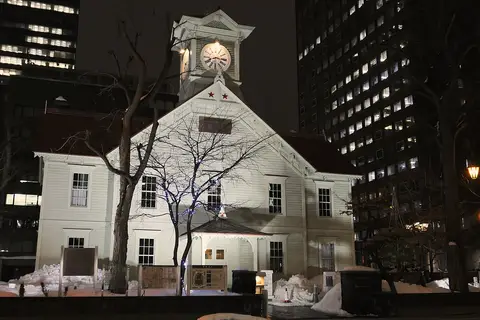
Sapporo is popular in December-February for snow scenes and winter festivals. The January normals are a high of -0.4°C, a low of -6.4°C and 108.4 mm of precipitation, so it stays below zero even at midday (JMA, 1991–2020). Streets are icy and very slippery, so wear shoes with good grip, and check winter festival dates and venues on the official site, as they change each year.
In Harbin, winter is the season for ice and snow. Harbin Ice and Snow World and the Sun Island snow sculpture expo open only in winter, so check each season's official announcement for opening dates. The January normals are a high of -13°C, a low of -24.6°C and 3 mm of precipitation (WMO/China Meteorological Administration, period not stated by the source). Our guide also gives winter temperatures as -20 to -30°C, so dress in three layers with snow boots, gloves and a hat. Walk the old buildings of Central Street and Saint Sophia Cathedral by day, and enter Ice and Snow World around 15:30-16:00 to see it both in daylight and lit up after dark.

January events — Nara's Yamayaki and Vienna's ball season
In Nara, the Mount Wakakusa Yamayaki hill-burning event is held on the fourth Saturday of January every year. Nara's January normals are a high of 8.7°C, a low of 0.8°C and 52.4 mm of rain (JMA, 1991–2020). It's an easy train ride from Osaka and Kyoto, so it works as a day trip.
Vienna is cold in January-February, but the ball season is at its peak. Compare it too if you want a winter Europe atmosphere.
Think twice in January — the rainy places
Warm doesn't always mean dry. Bali's wet season runs November to March, with the heaviest rain around December to February. Its January rainfall normal is 345 mm (WMO/BMKG, 1961–1990, Denpasar).
Singapore's November to January monsoon brings frequent showers, and its January rainfall is 221.6 mm (WMO/MSS, 1991–2020). Hotel rates also spike around Lunar New Year.
Cooler than you'd expect, and closures
Hanoi's winter from December to February is cooler and damper than many expect, with some days around 10°C. Its January normals are a high of 20°C and a low of 14.6°C (WMO/Viet Nam MHA, 1991–2020). Taipei is also cool and damp in January-February; January has a high of 19.4°C, a low of 14.2°C and 90.5 mm of rain (CWA, 1991–2020).
Okinawa's winter (December-February) is too cool for swimming but fine for sightseeing. January has a high of 19.8°C and a low of 14.9°C (JMA, 1991–2020, Naha). Ishigaki is warmer, with a January low of 16.7°C (JMA, 1991–2020), but in January-February the north wind makes it feel cooler, so bring a jacket.
Warsaw's Wilanów Palace is closed until 31 January 2027 (from 21 December 2026), and Tokyo and Osaka are crowded and pricey over New Year.
At a glance — January by city
A quick January summary. Figures are 'high/low temperature and rainfall'; sources and periods differ, so the comparison is rough.
- Warm and dry: Bangkok 32/21°C, 9 mm (WMO/TMD, 1961–1990); Ho Chi Minh City 32/23.4°C, 12 mm (WMO/Viet Nam MHA, 1991–2020); Phuket 32.4/23.9°C, 23.3 mm (WMO/TMD, period not stated); Kaohsiung 24.2/16.2°C, 19.1 mm (CWA, 1991–2020)
- Snow and ice: Sapporo -0.4/-6.4°C (JMA, 1991–2020); Harbin -13/-24.6°C (WMO/China Meteorological Administration, period not stated)
- January events: Nara's Mount Wakakusa Yamayaki (fourth Saturday of January), Vienna's ball season
- Usually rainy: Bali 345 mm, Singapore 221.6 mm
- Cooler than expected: Hanoi, Taipei, Okinawa, Ishigaki (north wind)
- Holiday crowds or closures: Ho Chi Minh City (Tet), Kaohsiung and Taipei (Lunar New Year), Phuket (December-January peak)
Plan your Harbin trip
We never take payment — compare, then book on the official partner site.
Plan your Bangkok trip
We never take payment — compare, then book on the official partner site.
FAQ
Where is warm and dry in January?
By January rainfall normals, Bangkok 9 mm (WMO/TMD, 1961–1990), Ho Chi Minh City 12 mm (WMO/Viet Nam MHA, 1991–2020) and Phuket 23.3 mm (WMO/TMD, period not stated by the source) are low. Our guides describe all three as in their dry season.
How cold is Harbin in January?
The January normals are a high of -13°C and a low of -24.6°C (WMO/China Meteorological Administration, period not stated by the source). Our guide also gives winter temperatures as -20 to -30°C, so prepare for serious cold.
Is Bali OK in January?
January is in the wet season, with a lot of rain. The January rainfall normal is 345 mm (WMO/BMKG, 1961–1990, Denpasar). For sunnier days, consider the April-October dry season.
Are there events only in January?
Nara's Mount Wakakusa Yamayaki is held on the fourth Saturday of January every year, and Vienna's ball season peaks in January-February.
Related reading
 Itinerary · ChinaHarbin in winter, 3 days: how cold it gets and what to wearHow cold Harbin gets (January lows average -24.6°C), the three-layer rule, the river-ice…
 ComparisonWhere is it less hot in summer and less cold in winter? Choosing Southeast Asia and Japan by climate normalsJuly-August highs, January lows and rainfall normals for 20 cities in Japan, Taiwan,…
 TipsPlanning a year-end or winter-break trip — where to go and what to do firstDecember to February is peak season for year-end and school-break travel, so earlier…