Comparison · United States
Seattle vs Vancouver: Which Should You Choose for a First Trip?
Two Pacific coast cities, Seattle in the US and Vancouver in Canada. We compare airport transfers, trip length and budget, same-month weather and sights.

Published
The short answer
Seattle is a Pacific Northwest port city in the US. Pike Place Market, a public market over 100 years old, coffee culture, the Space Needle observation tower and ferry rides are the core, and snowy Mount Rainier National Park is within day-trip range. If you like browsing markets, city walks and seeing the skyline from the water, Seattle fits well.
Vancouver is a Pacific coast city in western Canada where sea, snowy peaks and rainforest sit right next to downtown. Loop Stanley Park on the seaside path, cross a canyon suspension bridge, take in mountain views, and day-trip to Whistler or Victoria. If time outdoors close to the city comes first, Vancouver fits well.
Both guides suggest 4 to 5 days. But Seattle is in the US and Vancouver in Canada, so the guides give budgets in US dollars and Canadian dollars respectively, and entry requirements must be checked separately for each country.
Airport to city, and getting around
From Seattle-Tacoma International Airport (SEA), Link light rail runs to Downtown stations without changes. It takes about 40 minutes for a flat fare of about US$3. With lots of luggage or late at night, take a taxi or ride-hailing car from the designated area in the airport garage.
From Vancouver International Airport (YVR), the Canada Line (SkyTrain) runs to Waterfront Station downtown without changes in about 25 minutes. Trips starting at the airport add the YVR AddFare to the regular fare, and the total varies by time and zone. Taxis from the airport charge flat zone fares.
In town, Seattle's light rail and buses use the same transit card, and the monorail links Downtown and Seattle Center in minutes. In Vancouver, tap a Compass Card, contactless credit card or mobile wallet; with the same card you can transfer between bus, SkyTrain and SeaBus on one fare for up to 90 minutes. SkyTrain fares depend on zones, so tap out as well.
- Seattle Link light rail: about 40 min to Downtown, about US$3 (flat fare)
- Seattle taxi or ride-hailing: about 25-40 min to Downtown, about US$45-70 plus tip
- Vancouver Canada Line: about 25 min to Downtown, regular fare + AddFare of about CAD 6.50 (check the total officially)
- Vancouver taxi: flat zone fare, plus tip (check the official fare table)
How many days and what budget
Both guides suggest 4 to 5 days. In Seattle that means a waterfront walk on arrival, a day for Pike Place Market and Seattle Center, a Mount Rainier National Park day trip, and Ballard Locks plus a Bainbridge Island ferry on the last day. In Vancouver it means the city and North Vancouver, plus a day trip to Whistler or Victoria.
The budgets are in different currencies, so the numbers can't be compared directly. Each guide's daily budget per person is below. Taxes and tips added at checkout differ too. In Seattle, shelf prices often exclude sales tax, and restaurant tips are usually about 15-20% of the bill. In Vancouver, 5% federal GST and 7% BC PST may be added, and the official visitor guide says tips of 12-18% are common.
- Budget: Seattle about US$130-190 per day (hostel, food halls, public transport) / Vancouver about CAD 150-220 (hostel, food courts, public transport)
- Mid-range: Seattle about US$300-450 (city hotel, observation deck, restaurants) / Vancouver about CAD 350-500 (city hotel, attractions, restaurants)
- Luxury: Seattle about US$900+ / Vancouver about CAD 1,000+ (both: luxury hotel, private tours)
Weather by month, side by side
Both guides name June-September as the best time. Seattle is sunny and dry in June-September. Vancouver is also warm and dry in June-September, great for the outdoors.
Month for month, Seattle runs slightly warmer. July highs are 25°C in Seattle and 22°C in Vancouver, and January highs are 9°C and 7°C.
The cloudy, drizzly stretch differs a little. Seattle is often cloudy with drizzle from October to April, and its winters are cool with short days. In Vancouver, October-January is mild but rainy, with frequent drizzle. Vancouver also has cherry blossoms in spring.
In November, normal precipitation is 160 mm in Seattle and 175 mm in Vancouver. Seattle figures are NOAA National Centers for Environmental Information (NCEI), U.S. Climate Normals (Seattle–Tacoma International Airport station); Vancouver figures are from Environment and Climate Change Canada (Vancouver International (Airport) station). Both are 1991–2020 normals.
- January: Seattle high 9°C, low 3°C, 147 mm / Vancouver high 7°C, low 1°C, 174 mm
- April: Seattle high 15°C, low 6°C, 81 mm / Vancouver high 13°C, low 6°C, 86 mm
- July: Seattle high 25°C, low 14°C, 15 mm / Vancouver high 22°C, low 14°C, 34 mm
- October: Seattle high 16°C, low 8°C, 99 mm / Vancouver high 14°C, low 7°C, 124 mm
What you'll do: sights and food
Seattle centers on city sights and views from the water. Browse fish stalls, flowers and produce at Pike Place Market, quieter in the morning, then take the monorail to the Space Needle at Seattle Center. Kerry Park on Queen Anne Hill puts the skyline and Mount Rainier in one view. A ferry from the waterfront to Bainbridge Island shows the city from the water, and at Ballard Locks you can watch salmon climb the fish ladder roughly July-September, peaking around August. Mount Rainier National Park, a glaciated volcano, is about 2-3 hours by car.
In Vancouver, nature is right next door. The seawall around Stanley Park is about 9 km: 2-3 hours on foot or about 1 hour by bike. Browse the public market on Granville Island, then take the SeaBus about 12 minutes across to North Vancouver for the Capilano and Lynn Canyon suspension bridges and Grouse Mountain views. For day trips, Whistler is about 2 hours by car along the Sea to Sky Highway, and BC Ferries sails from Tsawwassen to Swartz Bay for Victoria in about 1 hour 35 minutes.
Salmon and seafood headline the food in both. Seattle has clam chowder (about US$8-15), Pacific salmon, oysters and Dungeness crab, neighborhood-café coffee (about US$4-7 a cup) and Seattle-style teriyaki. Vancouver has BC salmon, spring-season spot prawns, poutine (fries topped with cheese curds and gravy), Nanaimo bars and dim sum in Richmond. Many places in both cities charge market price for oysters and crab, so check first.


How to choose, and before you go
Choose Seattle for markets, coffee, an observation tower, ferries and volcano scenery like Mount Rainier. Choose Vancouver for a seawall next to downtown, canyons and mountains, and nearby nature such as Whistler or Victoria. If you visit Seattle in October-April or Vancouver in October-January, a waterproof jacket beats an umbrella for the drizzle.
Combining both cities means crossing the US-Canada border. Check official information for how to travel between them and how long it takes, and check official US and Canadian government information on entry requirements for both countries before you travel.
- Seattle is hilly, so wear comfortable shoes
- National park entry and road closures near Seattle vary by season, so check official information before you go
- Tap out when leaving Vancouver's SkyTrain and SeaBus, and use the same card when transferring
- Mountain roads and park facilities around Vancouver change by season, so check official information
- Entry requirements: check official US and Canadian government information
Plan your Seattle trip
We never take payment — compare, then book on the official partner site.
Plan your Vancouver trip
We never take payment — compare, then book on the official partner site.
FAQ
Seattle or Vancouver for a first visit?
Choose Seattle for markets, coffee, the observation tower, ferries and Mount Rainier; choose Vancouver for the seawall, canyons and mountains, and day trips to Whistler or Victoria. Both guides suggest 4 to 5 days.
Which is cheaper?
The guides' budgets are in different currencies, so they can't be compared directly. Mid-range per day is about US$300-450 in Seattle and about CAD 350-500 in Vancouver. Seattle adds sales tax and restaurant tips of about 15-20%; Vancouver may add 5% GST and 7% PST, with tips of 12-18% common.
When is the best time to go?
June-September for both. Normal July precipitation is 15 mm in Seattle and 34 mm in Vancouver. Drizzle is frequent in Seattle from October to April and in Vancouver from October to January, so pack a waterproof jacket.
Can I visit both on one trip?
You can, but you will cross a border. Check official information on how to travel between them and how long it takes, and on US and Canadian entry requirements, before you go.
Related reading
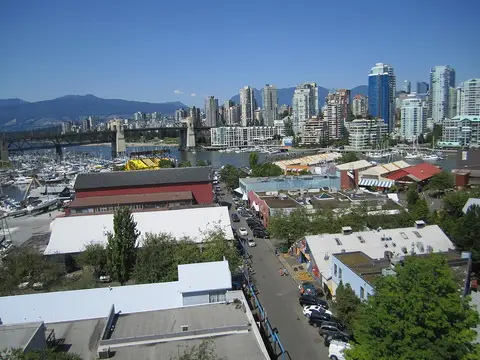 Itinerary · CanadaHow Many Days in Vancouver? A 4-Day Route and How to Get AroundVancouver suits 4 to 5 days: arrive on the Canada Line, see Stanley Park, Granville…
 Comparison · CanadaToronto vs Vancouver: Which Should You Choose for a First Trip to Canada?Lakeside Toronto or Vancouver between sea and mountains? We compare airport transfers,…
 TipsTipping Culture by Country: Where You Don't Tip, Where It's Optional and Where It's ExpectedTipping by country: where there is no tipping culture, where it's optional, where a…