Itinerary · Canada
How Many Days in Vancouver? A 4-Day Route and How to Get Around
Vancouver suits 4 to 5 days: arrive on the Canada Line, see Stanley Park, Granville Island and North Vancouver's canyons, plus a Whistler or Victoria day trip.

Published
How many days: the 4-day plan and where to stay
The Vancouver guide recommends 4 to 5 days, including day trips. This plan covers 4 days: Gastown on arrival day, Stanley Park and Granville Island on day 2, North Vancouver's canyons and mountains on day 3, and a final day via Richmond to the airport. With one more day, add a Whistler or Victoria day trip and make it 5 days.
Pick your base to fit the route. For a first visit, Downtown is easiest: it is the SkyTrain and SeaBus hub, close to Stanley Park and the seawall. Gastown, a short walk from Waterfront Station, suits historic streets; Yaletown, with a Canada Line station, suits dining and waterfront walks; and Kitsilano, with beaches and parks near Granville Island, makes a quieter stay. North Vancouver is the gateway to mountains and canyons, and Richmond is near the airport.
Day 1: Canada Line to Downtown, Gastown, seafood dinner
From Vancouver International Airport (YVR) station, the Canada Line (SkyTrain) runs to Waterfront Station downtown without changes in about 25 minutes. Trips starting at the airport add the YVR AddFare of about CAD 6.50 to the regular fare; the total varies by time and zone, so check official information. With lots of luggage or a late arrival, board a taxi at the designated taxi stands. Taxis from the airport charge flat zone fares, plus tip.
After checking in, stroll Gastown, Vancouver's birthplace, with cobblestones and brick buildings, a short walk from Waterfront Station. End the day with seafood. BC salmon, grilled, smoked or as sushi, is the West Coast's signature fish, and many places charge market price for items like spot prawns, a short spring-season delicacy, so check prices first.
Day 2: Stanley Park seawall, the aquarium, Granville Island, Kitsilano sunset
Start in Stanley Park, a large forested park beside downtown. The seawall around it is about 9 km: 2-3 hours on foot or about 1 hour by bike. The Vancouver Aquarium inside the park showcases Pacific coast marine life; check official information for admission.
In the afternoon, head to Granville Island, a small island in False Creek with a public market, studios and galleries. It is great for grazing, and you can cross by small ferry. Around sunset, move on to nearby Kitsilano and end the day watching the sun go down from the beach.
Buses cover the whole city. Bus trips are always a 1-Zone fare, and you only tap in when boarding.

Day 3: SeaBus to North Vancouver, a canyon bridge, Grouse Mountain
From Waterfront Station, the SeaBus crosses to Lonsdale Quay in North Vancouver in about 12 minutes, with skyline views from the water. In North Vancouver, pick one of the suspension bridges over the deep canyons. Capilano is a paid attraction (check official information for admission), while Lynn Canyon's bridge is in a public park. Check that it is open before you go.
Next comes Grouse Mountain, reached by aerial tram, with views over the city and sea, and snow fun in winter. Check official information for admission. Mountain roads and park facilities change by season, so check official information before you go.
Back in the city for the evening, choose one of two: Queen Elizabeth Park, a hilltop park south of downtown with flower gardens and city and mountain views, or Yaletown, where converted warehouses full of restaurants and bars sit near the False Creek seawall, for a waterfront walk and dinner.

Day 4: dim sum in Richmond and the airport, or one more day out of town
If day 4 is your departure day, the guide's plan is to share an array of dim sum at lunch in Richmond, near the airport, then head to the airport. The SkyTrain links the airport, Downtown and Richmond.
If you can add a day for a 5-day trip, use day 4 for a day trip and go via Richmond to the airport on day 5. Choose Whistler or Victoria.
- Whistler: about 2 hours by car along the Sea to Sky Highway between ocean and mountains; famous for summer hiking and winter skiing. Check official road conditions in winter
- Victoria: BC's capital. BC Ferries sails from Tsawwassen to Swartz Bay in about 1 hour 35 minutes. Check the official BC Ferries site for schedules and reservations
Before you go: fares, budget and when to go
Tap a Compass Card, contactless credit card or mobile wallet at the gates. Using the same card, you can transfer between bus, SkyTrain and SeaBus on one fare for up to 90 minutes. SkyTrain fares depend on zones, but all travel after 6:30 p.m. on weekdays and on weekends is a 1-Zone fare. Tap in and tap out on SkyTrain and SeaBus.
Daily budgets per person: about CAD 150-220 with hostels, food courts and public transport; about CAD 350-500 with a city hotel, attractions and restaurants; and about CAD 1,000+ with a luxury hotel and private tours. Shelf prices often exclude tax, so 5% federal GST and 7% BC PST may be added at checkout. Tipping is customary for restaurants, bars and other services; the official visitor guide says 12-18% is common.
June-September is warm and dry, best for the outdoors. Under Environment and Climate Change Canada's 1991-2020 normals for the Vancouver International (Airport) station, monthly rainfall from June to September is about 34-52 mm, and average highs in July and August are about 22°C. Spring brings cherry blossoms.
October-January is mild but rainy, with frequent drizzle; on the same normals, monthly rainfall is about 124-175 mm. Of these, November is the wettest, at about 175 mm. December and January have average highs of about 7°C and lows of about 1°C. A waterproof jacket beats an umbrella then. For entry requirements, check the Government of Canada's official information before you go.
Plan your Vancouver trip
We never take payment — compare, then book on the official partner site.
FAQ
How many days do you need in Vancouver?
The guide recommends 4 to 5 days. Four days covers the city and North Vancouver; five gives room for a Whistler or Victoria day trip.
How do I get from the airport to Downtown?
The Canada Line (SkyTrain) runs to Waterfront Station without changes in about 25 minutes. Trips starting at the airport add an AddFare of about CAD 6.50 to the regular fare. With lots of luggage or late at night, a taxi on a flat zone fare is handy.
Whistler or Victoria for a day trip?
For mountain hiking or skiing, Whistler is about 2 hours by car. To see BC's capital, take BC Ferries from Tsawwassen to Swartz Bay, about 1 hour 35 minutes, for Victoria. Check winter road conditions for Whistler, and ferry schedules and reservations for Victoria.
Is it fine to visit from October to January?
October-January is mild but rainy, with frequent drizzle (about 124-175 mm a month). A waterproof jacket beats an umbrella; if outdoor time is the priority, June-September is best.
Related reading
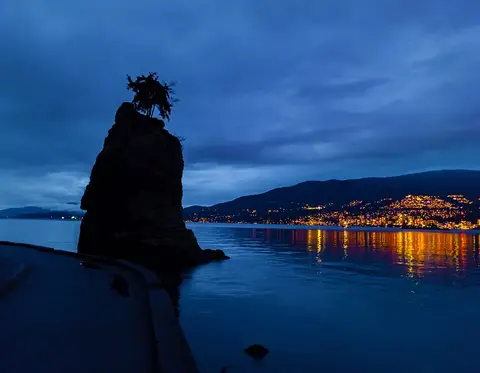 Comparison · CanadaToronto vs Vancouver: Which Should You Choose for a First Trip to Canada?Lakeside Toronto or Vancouver between sea and mountains? We compare airport transfers,…
 Itinerary · CanadaToronto for the first time: airport to city, and how many days?Four to five days in Toronto fit a Niagara Falls day trip. The UP Express or the TTC 900…
 ComparisonAirport to City: Train, Bus, Taxi or Transfer? A Practical ComparisonCompare the five ways to get from the airport into town, with tips for late-night…