Comparison · Japan
Hiroshima vs Kanazawa: Which Should You Choose for a First Trip?
Hiroshima's history and island day trip, or Kanazawa's gardens and old streets? Airport transfers, days, budgets, same-month weather and sights compared.

Published
The short answer
Hiroshima is a city where the Peace Memorial Park and the Atomic Bomb Dome invite reflection, with Miyajima's famous floating torii an easy day trip away. Known for okonomiyaki and oysters, it is compact and suits a short visit.
Kanazawa, in Japan's Hokuriku region, preserves old teahouse streets, samurai residences and Kenrokuen, counted among Japan's three great gardens. It's also known for fresh Sea of Japan seafood and gold-leaf crafts.
Best for: Hiroshima suits travelers who want time for reflection, a Miyajima island day trip and okonomiyaki at the griddle counter. Kanazawa suits those who want garden walks, old teahouse and samurai streets, market seafood and a Shirakawa-go day trip.

Getting there and airport to city
Hiroshima Airport (HIJ) sits on hills well east of the city. The limousine bus to Hiroshima Station is the easiest option; with a rail pass, you can also take the airport bus to Shiraichi and change to JR. Taxis are expensive because of the distance and only worth it for groups with lots of luggage.
Kanazawa's air gateway is Komatsu Airport (KMQ) in neighboring Komatsu city, with buses to Kanazawa Station timed to arrivals. From Kansai Airport (KIX), which has many international flights, take the Haruka to Shin-Osaka (or Kyoto), the Thunderbird to Tsuruga, then change to the Hokuriku Shinkansen. If you're coming via Tokyo, the Hokuriku Shinkansen runs straight from Tokyo Station to Kanazawa Station.
Check flight schedules with the airlines. Recent fares are on the route pages at the end of this article.
- Hiroshima limousine bus: about 45-55 min to Hiroshima Station, about 1,400-1,500 JPY
- Hiroshima bus + JR: about 15 min by bus to Shiraichi + about 45 min by JR, roughly 1 hour to 1 hour 20 min with the transfer (check official fares)
- Hiroshima taxi: about 45-60 min to the city (expensive due to the distance; check official fares)
- Kanazawa, Komatsu Airport bus: about 40 min to Kanazawa Station, about ¥1,200-1,400
- Kansai Airport → Kanazawa (limited express + Hokuriku Shinkansen): about 3-4 hours (check official routes and fares)
- Tokyo Station → Kanazawa Station (Hokuriku Shinkansen): about 2 hours 30 min to 3 hours, about ¥14,000-15,000
How many days and what budget
The guides suggest 3 to 4 days for Hiroshima and 3 days for Kanazawa (4 with Shirakawa-go).
In Hiroshima, plan the Peace Memorial Park and the Atomic Bomb Dome on day 1, Miyajima on day 2, and the Peace Memorial Museum, Hiroshima Castle and Shukkeien on day 3 before a trip to Kure or Onomichi. In Kanazawa, plan Omicho Market and Higashi Chaya on day 1, Kenrokuen, Kanazawa Castle Park, the 21st Century Museum and the Nagamachi Samurai District on day 2, and a Shirakawa-go day trip on day 3.
Below are the daily budgets exactly as each guide gives them. In all three tiers, the Kanazawa guide's figures are higher than the Hiroshima guide's.
- Budget: Hiroshima about 8,000 JPY per day (business hotel, okonomiyaki, streetcar); Kanazawa about ¥9,000-13,000 per day (business hotel, market food, buses)
- Mid-range: Hiroshima about 15,000-20,000 JPY per day (city hotel, restaurants, Miyajima round trip); Kanazawa about ¥20,000-30,000 per day (nicer hotel, restaurants, admissions)
- High-end: Hiroshima about 35,000 JPY+ per day (Miyajima ryokan, set-course dinners); Kanazawa about ¥55,000+ per day (ryokan, kaiseki dining)
Weather by month, side by side
The two guides pick similar seasons. Hiroshima's best times are late March-April (cherry blossoms) and October-November (autumn leaves); Kanazawa's are cherry blossoms in April and autumn colors in October-November. So we compare April, October and November, the months both guides recommend.
The figures are 1991–2020 normals from the Japan Meteorological Agency: Hiroshima station for Hiroshima and Kanazawa station for Kanazawa. Each line shows average high / average low / monthly precipitation.
In all three months Kanazawa's highs and lows are a little lower than Hiroshima's. April rainfall is similar in both cities, but in October and November Kanazawa gets far more rain than Hiroshima. Of these three months, Hiroshima's lowest rainfall is in November.
Hiroshima's guide lists June to early July as the rainy season and July-August as hot and humid, and notes that typhoons in August-September can stop ferries and flights. Oysters are in season in winter (roughly November-February). In Kanazawa, winter brings frequent snow along with snowy scenery and winter seafood, and summers are hot and humid. Normals are long-term averages, not this year's weather, so check the forecast before you go.
- April: Hiroshima 20°C / 10°C / 141mm, Kanazawa 17°C / 8°C / 144mm
- October: Hiroshima 24°C / 15°C / 109mm, Kanazawa 22°C / 14°C / 177mm
- November: Hiroshima 18°C / 9°C / 69mm, Kanazawa 16°C / 8°C / 251mm
What you do there: sights, food and getting around
Hiroshima's Peace Memorial Park and Atomic Bomb Dome are a park remembering the 1945 atomic bombing and the dome, a World Heritage site. It is a place of remembrance — please be quiet and respectful. The Hiroshima Peace Memorial Museum's photos and belongings can be heavy going, and it gets crowded, so go early (check official information for hours).
Itsukushima Shrine on Miyajima is the World Heritage shrine with the famous red torii in the sea. The torii stands in the sea at high tide and can be approached on foot at low tide, so check official tide times. Mount Misen, Miyajima's highest peak, has views over the Seto Inland Sea islands. In the city, Hiroshima Castle's 1958 reconstructed keep closed on March 22, 2026 due to aging, so it can now only be viewed from outside. There is also Shukkeien Garden, the Kure Maritime Museum about 40-50 minutes away by JR, and the seaside town of Onomichi.
Kanazawa centers on Kenrokuen, counted among Japan's three great gardens, and Kanazawa Castle Park right next to it. In winter, ropes (yukitsuri) protect Kenrokuen's trees from snow. The Higashi Chaya District with its wooden-lattice teahouses, Omicho Market with over 300 years of history, the round glass 21st Century Museum of Contemporary Art and the Nagamachi Samurai District with earthen walls and canals are the other classics. Myoryuji (Ninja Temple) can be visited only by guided tour with advance phone reservation.
For food, Hiroshima has Hiroshima-style okonomiyaki, oysters in season in winter, anagomeshi from the Miyajima area, Hiroshima tsukemen and momiji manju. Kanazawa has seafood rice bowls at Omicho Market (about ¥2,000-4,000), nodoguro (blackthroat seaperch), Kanazawa curry (about ¥800-1,200), Kanazawa oden, especially popular in winter (about ¥150-600 per piece), and gold-leaf ice cream.


- Hiroshima transport: the streetcar linking Hiroshima Station, the Atomic Bomb Dome, Hatchobori and Miyajimaguchi is the backbone, and IC transit cards work.
- To Miyajima: about 30 minutes by JR from Hiroshima Station to Miyajimaguchi, then about 10 minutes by ferry. A visitor tax applies on entry to the island, so check official information.
- Kanazawa transport: frequent city buses link the station and main sights, and every bike-share bike is electric-assisted, so slopes are easy. You can walk too, though distances add up.
- Rain and snow are frequent in Kanazawa. Carry an umbrella, and wear non-slip shoes in winter.
How to choose, and what to check before you go
If you want time for reflection, an island day trip to the torii in the sea, and okonomiyaki and oysters, Hiroshima fits well. If you want garden walks, old teahouse and samurai streets, market seafood and a day trip to a thatched-roof village, Kanazawa fits well. The guides don't cover travel between Hiroshima and Kanazawa, so if you combine them, check transport with official sources.
Entry procedures and online arrival forms can change, so check Japanese government or embassy information before you travel.
- Visit the Peace Park and museum quietly and avoid playful photos at the memorials
- Check Miyajima tide times and the visitor tax with official information, and don't feed the island's deer
- Book Kanazawa's Myoryuji tour and Shirakawa-go highway buses ahead via official information
- In Kanazawa's old teahouse districts, respect notices about private property and photography
- Hiroshima's airport is far from the city: on departure day, check the limousine schedule and leave with plenty of time
Plan your Hiroshima trip
We never take payment — compare, then book on the official partner site.
Plan your Kanazawa trip
We never take payment — compare, then book on the official partner site.
FAQ
Hiroshima or Kanazawa for a first visit?
Choose Hiroshima for history and a Miyajima island day trip, or Kanazawa for gardens, old streets and market seafood. The guides suggest at least 3 days for either.
Which needs a bigger budget?
The guides' mid-range daily budgets are about 15,000-20,000 JPY for Hiroshima and about ¥20,000-30,000 for Kanazawa. The Kanazawa guide's budget and high-end figures are higher too.
When is the best time to go?
Both guides pick cherry blossoms in April and autumn leaves in October-November. In the same months' normals, Kanazawa is a little cooler, and in October-November it gets far more rain than Hiroshima.
How do I get to Kanazawa?
The closest airport is Komatsu Airport in neighboring Komatsu city, about 40 minutes by airport bus to Kanazawa Station. From Kansai Airport it takes about 3-4 hours by limited express and the Hokuriku Shinkansen, and from Tokyo Station about 2 hours 30 min to 3 hours by the Hokuriku Shinkansen.
Related reading
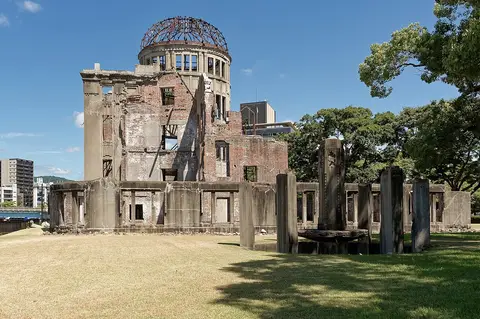 Itinerary · JapanFirst time in Hiroshima: airport to city, and how many days do you need?Hiroshima Airport to Hiroshima Station by limousine bus in about 45-55 min, a 3 to 4 day…
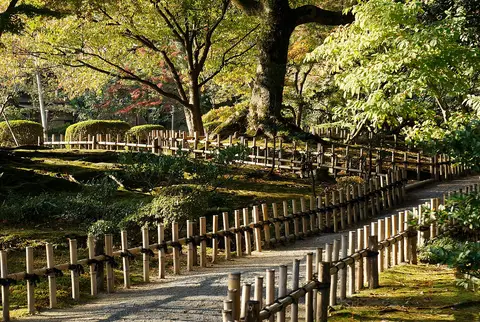 Itinerary · JapanFirst time in Kanazawa: airport to city, and how many days do you need?Komatsu Airport to Kanazawa Station by airport bus in about 40 min, a 3-day plan (4 with…
 Tips · JapanJapan's IC Cards Explained: Suica, PASMO and ICOCA — Which One and How to Use ItThe differences between Japan's transit IC cards, adding them to your phone wallet, how…