Comparison · South Korea
Seoul vs Busan: Which Should You Choose for a First Trip?
Seoul or Busan for a first Korea trip? Airport transfers, the KTX between them, the guides' days and budgets, same-month weather normals and sights compared.

Published
The short answer
Seoul mixes royal palaces and hanok alleys with glass towers, K-pop energy and food streets that stay busy past midnight. The subway reaches almost everywhere, which makes it an easy city for first-timers, shoppers, cafe hoppers and food lovers.
Busan is Korea's second city, where beaches, a busy port and hillside villages meet the sea. The draws are Haeundae and Gwangalli beaches, the lit-up Gwangan Bridge at night and market food such as the seafood at Jagalchi.
Choose Seoul for palaces, hanok lanes, shopping, cafes and neighborhood hopping over 3 to 5 days. Choose Busan for the sea, night views and seafood in 2 to 3 days. The two cities are linked by the KTX high-speed train, so you can also combine them.

Getting there: airports and the KTX
Seoul's gateways are Incheon and Gimpo airports. From Incheon, the AREX Express Train runs non-stop to Seoul Station in about 40-50 minutes (about 10,000 won; check the AREX official site), and the AREX All-Stop Train takes about 60 minutes (about 4,000-5,000 won) with stops at Hongik University and Gongdeok. Airport limousine buses reach major hotels in Myeongdong, Gangnam and Jamsil in about 60-90 minutes, handy with heavy luggage. From Gimpo (GMP), Metro Lines 5 and 9 and AREX get you into the city in about 20-40 minutes.
For Busan by air, you arrive at Gimhae International Airport (PUS). The Busan-Gimhae Light Rail runs to Sasang, where you change to subway Line 2: about 30-40 minutes to Seomyeon and 1 hr-1 hr 20 min to Haeundae, for about 1,500-3,000 won. Taxis (about 25,000-40,000 won) are easiest with luggage, and airport limousines run two routes, Haeundae–Gijang and Seomyeon–Bujeon.
If you land at Incheon and are heading to Busan, first get to Seoul Station, then take the KTX to central Busan Station: about 2.5-3 hours and about 50,000-60,000 won in standard class, depending on time. Busan Station is near Nampo-dong and connected to subway Line 1. KTX trains often sell out at weekends and holidays, so book ahead, and check flights with the airlines.
How many days, and what budget
The guides suggest 3 to 5 days for Seoul and 2 to 3 days for Busan. Seoul's 4-day plan gives a day each to palaces and Bukchon, Myeongdong and N Seoul Tower, Seongsu-dong and Hongdae, and Gangnam and a Han River park. Busan's 3-day plan covers Haeundae, Haedong Yonggungsa and Gwangalli on day 1, Gamcheon, Jagalchi and Huinnyeoul on day 2, and Taejongdae on the morning of day 3. In Busan, Haeundae and Nampo-dong are almost an hour apart by subway, so group sights by area.
The guides' daily budgets are close. Busan's budget range starts a little lower, its mid-range tops out a little higher, and both put high-end at about 350,000 won+ per day.
- Budget: Seoul about 70,000-90,000 won per day (hostel, market food, subway); Busan about 60,000-90,000 won per day (guesthouse, subway, market food)
- Mid-range: Seoul about 150,000-200,000 won per day (3-4 star hotel, restaurants, some taxis); Busan about 150,000-220,000 won per day (city hotel, restaurant meals, some taxis)
- High-end: Seoul about 350,000 won+ per day (5-star hotel, fine dining, taxis); Busan about 350,000 won+ per day (sea-view luxury hotel, seafood feasts)
Weather by month, side by side
Both guides rate May and September-October. Seoul names April-May and September-November, and Busan names May-June and September-October. In July-August Seoul is hot, humid and rainy (monsoon), while Busan is in peak beach season, crowded, with rainy spells and possible typhoons.
The figures below are Korea Meteorological Administration 30-year normals for 1991–2020, from Seoul station for Seoul and Busan station for Busan. Each line shows average high / average low / monthly rainfall.
Seoul's daytime highs match or slightly top Busan's in April and May, while Busan is warmer in October and November, and Busan's spring and autumn lows are a little higher. Seoul gets less rain than its monthly average for the year in April, May, October and November; Busan does in October and November. Busan gets more rain than Seoul in April and May, and both cities are above their monthly average in June and September. July is the wettest month of the year in both cities: about 414 mm in Seoul and 327 mm in Busan. In winter Busan is milder than Seoul, but sea winds are cold (January average high 2°C in Seoul, 8°C in Busan).
- April: Seoul 18°C / 8°C / 73 mm, Busan 18°C / 10°C / 141 mm
- May: Seoul 24°C / 14°C / 104 mm, Busan 22°C / 15°C / 156 mm
- June: Seoul 28°C / 19°C / 130 mm, Busan 25°C / 18°C / 188 mm
- July: Seoul 29°C / 22°C / 414 mm, Busan 28°C / 22°C / 327 mm
- August: Seoul 30°C / 23°C / 348 mm, Busan 30°C / 24°C / 267 mm
- September: Seoul 26°C / 18°C / 142 mm, Busan 26°C / 20°C / 161 mm
- October: Seoul 20°C / 11°C / 52 mm, Busan 23°C / 15°C / 80 mm
- November: Seoul 12°C / 4°C / 51 mm, Busan 17°C / 8°C / 50 mm
What you do there
Seoul centres on palaces and hanok lanes. Gyeongbokgung is closed on Tuesdays and free if you wear hanbok, and the Changdeokgung Secret Garden is visited only on timed guided tours (closed Mondays). Bukchon Hanok Village is residential, so keep noise down. Add N Seoul Tower at sunset, Gwangjang Market for mung bean pancakes and yukhoe, chicken and beer at a Han River park, Seongsu-dong's cafes and pop-ups, and street music in Hongdae and Yeonnam-dong; each neighborhood has its own feel.
Busan's classics are a walk along Haeundae Beach, Gwangan Bridge lit up after dark, Haedong Yonggungsa on seaside rocks and Taejongdae, a clifftop park at the tip of Yeongdo island. Gamcheon and Huinnyeoul culture villages are residential, so walk quietly, and confirm prices before ordering seafood at Jagalchi Fish Market. Busan's signature foods are dwaeji gukbap, milmyeon, ssiat hotteok and fish cakes.
Seoul's subway reaches nearly every sight and service ends around midnight. In Busan, subway Lines 1-4 link the main areas, and buses or taxis are easier for places the subway doesn't reach, such as Gamcheon and Taejongdae. In both cities one transit card covers the subway and buses, and Korean map apps (such as Naver Map or KakaoMap) are handy for directions.


How to choose, or do both
Pick Seoul if you want palaces, hanok lanes, shopping, cafes and a different neighborhood mood each day; pick Busan if you want the sea, night views and market seafood on a shorter trip.
To do both, take the KTX from Seoul Station to Busan Station (about 2.5-3 hours). Going by the guides' lengths, you could plan 3 days in Seoul plus 2 days in Busan; the Busan guide's last day ends at Busan Station or the airport. Transit cards from other Korean cities work in Busan too.
Many shops in Seoul close over Lunar New Year and Chuseok, and Busan's beach-area hotels fill up and get pricey in summer and on weekends, so book early. Entry rules for Korea (including electronic travel authorization for some nationalities) can change, so check official Korean government information before you travel.
Plan your Seoul trip
We never take payment — compare, then book on the official partner site.
Plan your Busan trip
We never take payment — compare, then book on the official partner site.
FAQ
Seoul or Busan for a first trip?
Seoul for palaces, shopping and cafes; Busan for the sea and night views on a shorter trip. The guides suggest 3 to 5 days for Seoul and 2 to 3 days for Busan.
How do I get from Seoul to Busan?
Take the KTX from Seoul Station to central Busan Station: about 2.5-3 hours and about 50,000-60,000 won in standard class, depending on time. You can also fly into Gimhae Airport and take the light rail and subway into the city.
Which costs more?
The guides' daily budgets are close. Mid-range: Seoul about 150,000-200,000 won per day, Busan about 150,000-220,000 won per day; high-end is about 350,000 won+ per day in both.
Which months suit both?
Both guides rate May and September-October. In October, normal rainfall is about 52 mm in Seoul and 80 mm in Busan, below each city's monthly average for the year (Korea Meteorological Administration, 1991–2020).
Related reading
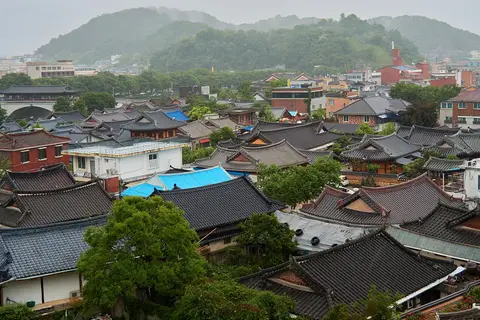 Itinerary · South KoreaDay trips from Seoul by train: Gangneung, Jeonju or Gyeongju?Our guides give train times from Seoul and call day trips possible for Gangneung, Jeonju…
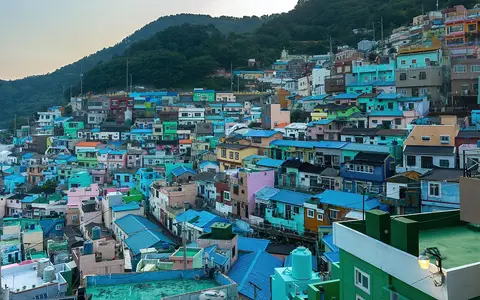 Itinerary · South KoreaBusan in 2 Days: Gimhae Airport to Haeundae and BeyondLight rail, limousine and taxi times and fares from Gimhae Airport to Haeundae and…
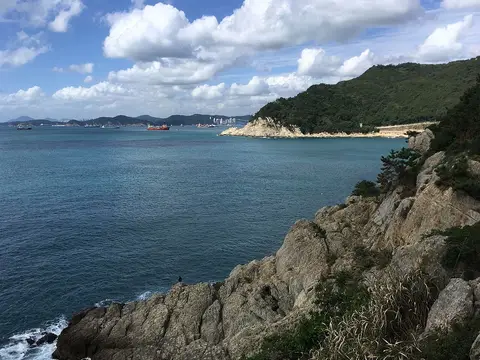 Comparison · South KoreaBusan vs Jeju: Which Should You Choose for a First Trip?Busan or Jeju for your Korea trip? Getting there and airport transfers, the guides' days…