Comparison · Japan
Osaka vs Kyoto: Where Should You Stay on a Kansai Trip?
Osaka or Kyoto as your Kansai base? We compare transfers from Kansai Airport, travel between the cities, areas to stay, trip length, budgets and weather.

Published
The short answer
Osaka is the hub of the Kansai region, famous for its food culture. Its guide calls it a good base for the whole region, since Kyoto, Nara and Kobe are a short train ride away. Universal Studios Japan also makes it great for families.
Kyoto was Japan's capital for over a thousand years, full of shrines with red torii gates, ancient temples and traditional streets. Its guide suggests visiting Fushimi Inari Taisha and the Arashiyama Bamboo Grove early in the morning, when there are fewer people, and lists Arashiyama as an area to stay that is great for early mornings.
Best for: an Osaka base suits a first Kansai trip, food and nightlife, Universal Studios Japan, and mixing in day trips to Kyoto, Nara and Kobe. A Kyoto base suits travelers who want to see temples and shrines from early morning and anyone after a quieter stay.
From Kansai Airport to each city
Both cities use Kansai Airport (KIX); Kyoto has no airport of its own. For Osaka, the Nankai Airport Line runs direct to Namba, and the JR Limited Express Haruka runs to Tennoji, Shin-Osaka and on to Kyoto.
The Kyoto guide calls the limited express train with no change from Kansai Airport to Kyoto Station the easiest option; check official information for discount tickets for visitors. Riding into central Osaka and changing to a private railway for Kyoto means more changes, but it is convenient if you are also visiting Osaka.

- Osaka, Nankai Airport Line (Rapi:t / Airport Express): about 35-50 min to Namba; check official fares (the Rapi:t adds a limited express charge)
- Osaka, JR Limited Express Haruka: about 30-50 min to Tennoji / Shin-Osaka; about 1,800-2,500 yen for non-reserved seats, with discounted tickets for foreign visitors
- Osaka, JR Kansai Airport Rapid: about 50-70 min to Tennoji and Osaka Station (Umeda), no limited-express surcharge (check official fares)
- Osaka, Airport Limousine Bus: about 50-70 min to major hotels in Umeda, Namba and more; about 1,400-2,000 yen, depending on the stop
- Kyoto, limited express train: about 1 hr 20 min to Kyoto Station; about 2,000-3,600 yen, depending on the ticket
- Kyoto, airport limousine bus: about 1 hr 30 min to Kyoto Station; about 2,500-3,000 yen
- Kyoto, trains via Osaka: about 1 hr 40 min-2 hr; check official fares (varies by route)
Getting between Osaka and Kyoto
According to the Osaka guide, Hankyu, Keihan, Kintetsu and JR lines reach Kyoto, Nara and Kobe in 30 minutes to an hour. Each line leaves from a different station (Umeda, Namba, etc.), so check yours in advance.
If you stay in Osaka, Umeda, where JR, Hankyu, Hanshin and the subway all meet, is the easiest area for day trips to Kyoto and Kobe. The Kyoto guide's 3-day plan also ends with an afternoon move on to Osaka or Kansai Airport.
An ICOCA IC card works on trains, subways and buses and at convenience stores in both cities. Kyoto's city buses reach nearly every temple and shrine but get very crowded in peak season, so mixing the subway, JR and private railways is faster.
Where to stay: areas in each city
These are the areas the two guides recommend for a stay: five in Osaka and four in Kyoto.
Kyoto charges a separate accommodation tax. Check your booking and official information for the amount.

- Osaka, Namba / Shinsaibashi (first visit, food and nightlife): right by Dotonbori, with Nankai trains to Kansai Airport. It stays loud late, so pick a place a block or two away if you want quiet.
- Osaka, Umeda (transport hub, Kyoto and Kobe trips): JR, Hankyu, Hanshin and the subway all meet here, ideal for day trips. The underground malls are a maze, so check your exit.
- Osaka, Shin-Osaka (shinkansen travel): convenient for bullet trains, with many business hotels. Little to see nearby.
- Osaka, Tennoji (value, airport access): the Haruka stops here and rooms are relatively cheap. Close to Shinsekai and the Abeno Harukas observatory.
- Osaka, Bay Area (Universal City, USJ-focused family trips): easy early entry to the park, but farther from the city sights.
- Around Kyoto Station (first visit, transport hub): airport trains, buses and railways all meet here. Evenings are a bit quiet.
- Kyoto, Shijo Kawaramachi and Gion (food, shopping, evening walks): the busy center next to the old streets, lively into the evening. Pricier and crowded in peak season.
- Kyoto, around Karasuma Oike (quieter stays, subway access): where both subway lines meet, calmer than the nightlife area and well connected.
- Kyoto, Arashiyama (nature, quiet stays): close to the bamboo grove and river, great for early mornings. About 30 minutes by train from the center.
How many days and what it costs
The guides suggest 4 days for Osaka (5 with day trips to Kyoto or Nara) and 3 to 4 days for Kyoto. The Osaka plan already includes one day trip to Kyoto or Nara.
Daily budgets per person, from each guide, are below. The mid-range figure is about 17,000-22,000 yen in Osaka and about 18,000-25,000 yen in Kyoto.
- Osaka, budget: about 7,000-9,000 yen (hostel, konbini, street food)
- Osaka, mid-range: about 17,000-22,000 yen (business hotel, restaurant meals)
- Osaka, high-end: about 45,000 yen+ (luxury hotel, USJ Express Pass)
- Kyoto, budget: about 8,000-10,000 yen (guesthouse, buses, simple meals)
- Kyoto, mid-range: about 18,000-25,000 yen (hotel, entry fees, restaurant meals)
- Kyoto, high-end: about 40,000 yen+ (ryokan, kaiseki dinner, taxis)
When to go: the same months side by side
Both guides name late March to early April (cherry blossoms) and autumn as the best times. For autumn, the Osaka guide says October-November and the Kyoto guide says mid-November to early December for the autumn colors. Kyoto is extremely crowded then, with higher hotel prices; in Osaka, Golden Week (late April to early May) and New Year are crowded and pricey.
The rainy season runs from mid-June to July in the Osaka guide and June-July in the Kyoto guide, and July-August is very hot and humid in both. The Osaka guide also advises avoiding typhoon season in August-September.
On average, April has a high of 20°C, a low of 11°C and 102 mm of rain in Osaka, and a high of 20°C, a low of 9°C and 117 mm in Kyoto. November has a high of 18°C, a low of 10°C and 73 mm in Osaka, and a high of 17°C, a low of 8°C and 74 mm in Kyoto, less rain than the 12-month average in both cities. August is the hottest month in both, with a high of 34°C; lows are 26°C in Osaka and 25°C in Kyoto. In all three months compared, Kyoto's lows are a little cooler than Osaka's.
These are the 1991–2020 normals for Osaka station and Kyoto station from the Japan Meteorological Agency. Check the official forecast before you go for this year's weather.

How to choose: one base or split your stay
If you want Universal Studios Japan, food, and day trips to Kyoto, Nara and Kobe, one base in Osaka keeps things simple. The guides point to Umeda for lots of day trips, Tennoji for airport access and value, and Namba / Shinsaibashi for a first visit.
If you want unhurried time at Kyoto's temples and shrines, staying in Kyoto is another option. The Kyoto guide notes that many temples close around 5 pm and suggests visiting the big sights in the morning. If you split your stay, the Kyoto guide's 3-day plan shows one way: move from Kyoto to Osaka or Kansai Airport on the last day.
Before you go: check official Japanese government information on entry procedures. From November 1, 2026, tax-free shopping switches to a refund system: you pay the tax at purchase and get it refunded after customs checks your goods at departure; check official information for the procedure. Kansai Airport departure halls get busy, so arrive 2-3 hours before international flights.
Plan your Osaka trip
We never take payment — compare, then book on the official partner site.
Plan your Kyoto trip
We never take payment — compare, then book on the official partner site.
FAQ
Where should I stay on a first trip to Kansai?
The Osaka guide calls Osaka a good base for the whole Kansai region. For a first visit, the guides point to Namba / Shinsaibashi in Osaka and the area around Kyoto Station in Kyoto.
Can I stay in Osaka and visit Kyoto as a day trip?
Yes. According to the Osaka guide, Hankyu, Keihan, Kintetsu and JR lines get you there in 30 minutes to an hour, and its 4-day plan includes a day trip to Kyoto or Nara. Each line leaves from a different station, so check in advance.
How do I go straight from Kansai Airport to Kyoto?
The limited express train runs to Kyoto Station with no change in about 1 hr 20 min, for about 2,000-3,600 yen. The airport limousine bus takes about 1 hr 30 min and costs about 2,500-3,000 yen.
Anything to know before staying in Kyoto?
Kyoto charges a separate accommodation tax, so check your booking and official information for the amount. Shijo Kawaramachi and Gion are pricier and crowded in peak season; for a quieter stay, the guide points to the area around Karasuma Oike.
Related reading
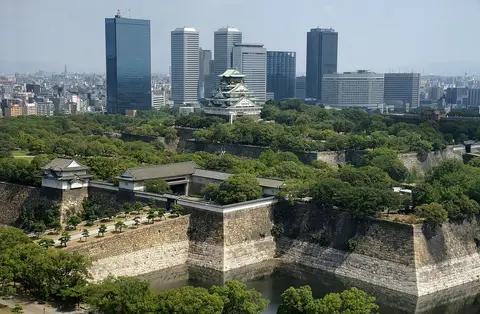 Itinerary · JapanOsaka in 4 Days: Day-by-Day Route from Kansai AirportFrom Kansai Airport to your hotel area, then USJ, a Kyoto or Nara day trip and the run…
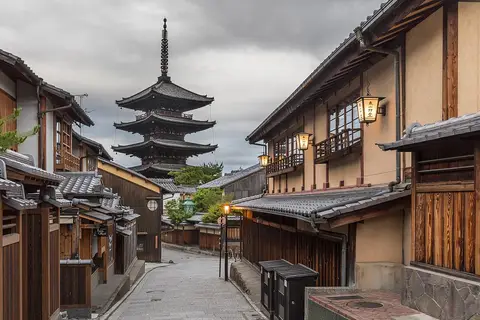 Itinerary · JapanOne Day in Kyoto: Where Should You Start?One day in Kyoto? Pick the east side (Kiyomizu-dera, Gion) or the west (Arashiyama,…
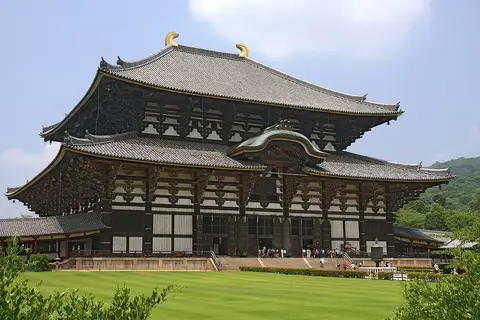 Itinerary · JapanNara day trip from Osaka or KyotoKintetsu and JR travel times from Osaka and Kyoto to Nara, a walking day route via…