Comparison · Japan
Fukuoka vs Busan: Which Port City for a Short City Break?
Fukuoka or Busan for a short city break? Airport transfers, the guides' days and daily budgets, same-month weather normals and what you do in each city.

Published
The short answer
Fukuoka is Kyushu's largest city. Its airport is just minutes from downtown by subway, and Hakata, Nakasu and Tenjin are 20-30 minutes apart on foot, so a short trip is easy. It is known for tonkotsu ramen, motsunabe hot pot and the Nakasu yatai food stalls, and you can add day trips to Dazaifu, Yanagawa, Yufuin and Beppu.
Busan is Korea's second city, where beaches, a busy port and hillside villages meet the sea. A trip centers on Haeundae and Gwangalli beaches, Gwangan Bridge lit up at night and market food at places like Jagalchi and Gukje Market, and you get around by subway and bus.
Best for: Fukuoka suits a short trip that mixes food, shrine and park walks and a hot-spring day trip. Busan suits travelers who come for beaches, night views, market seafood, sea cliffs and hillside villages.

Getting there and from the airport
Fukuoka's airport is very close to the city, but the international terminal is separate from the domestic terminal with the subway station. Take the free shuttle bus to the domestic terminal and then the Subway Kuko Line, or take the bus from outside the international terminal straight to Hakata Station (Chikushi exit). Check flight options with airlines.
In Busan, from Gimhae International Airport (PUS), take the Busan-Gimhae Light Rail to Sasang, then subway Line 2 toward Seomyeon and Haeundae. Haeundae takes about 1 hr-1 hr 20 min, so plan your first day around it. You can also arrive by KTX high-speed train from Seoul Station at central Busan Station; if you land at Incheon Airport, first get to Seoul Station.
- Fukuoka Subway Kuko Line: about 5 min to Hakata, about 11 min to Tenjin (plus a 10-15 min shuttle), about 260-310 yen
- Fukuoka international terminal to Hakata Station bus: about 15-20 min, about 400 yen
- Fukuoka taxi: about 15-20 min to Hakata, about 1,500-2,500 yen
- Busan light rail and subway: about 30-40 min to Seomyeon, 1 hr-1 hr 20 min to Haeundae, about 1,500-3,000 won
- Busan limousine bus or taxi: about 40 min to Seomyeon, 1 hr-1 hr 20 min to Haeundae; taxi about 25,000-40,000 won (limousine fares vary by route, check official info)
- Busan KTX (Seoul Station → Busan Station): about 2 hours 30 minutes to 3 hours, about 50,000-60,000 won standard class, varies by time
How many days, and what budget
The guides suggest 3 days for Fukuoka (4 with a Yufuin or Beppu day trip) and 2 to 3 days for Busan. In Busan, Haeundae and Nampo-dong are almost an hour apart by subway, so group sights by area.
The two guides give budgets in different currencies, yen and won, so here are each guide's daily figures as written.
Many Fukuoka yatai are cash only, and small eateries and shrines may be too, so carry some yen. Seafood at Busan's markets is often sold by weight or market price; confirm the price and any table charge before ordering.
- Budget: Fukuoka about 6,000-8,000 yen per day (hostel, ramen, konbini); Busan about 60,000-90,000 won per day (guesthouse, subway, market food)
- Mid-range: Fukuoka about 15,000-20,000 yen per day (business hotel, motsunabe dinner); Busan about 150,000-220,000 won per day (city hotel, restaurant meals, some taxis)
- High-end: Fukuoka about 40,000 yen+ per day (upscale hotel, mizutaki, onsen ryokan); Busan about 350,000 won+ per day (sea-view luxury hotel, seafood feasts)
Weather by month, side by side
The guides pick slightly different months. Fukuoka's guide names late March to early April (cherry blossoms) and October-November; Busan's names May-June and September-October. The month both guides name is October.
The figures below are 30-year normals for 1991–2020: Japan Meteorological Agency data from Fukuoka station for Fukuoka, and Korea Meteorological Administration data from Busan station for Busan. Each line shows average high / average low / monthly rainfall.
In every month below, Fukuoka's highs and lows are a little warmer than Busan's. Fukuoka gets less rain than its monthly average for the year in March, April, October and November, and more in June, at about 250 mm. Busan gets less than its monthly average in March, October and November, and more in May, June and September. July is the wettest month of the year in both cities. July-August is hot in Fukuoka, and in Busan it is peak beach season, crowded, with rainy spells and possible typhoons. In Fukuoka, typhoons often pass through Kyushu in August-September, so flights can be cancelled.
- March: Fukuoka 15°C / 7°C / 104 mm, Busan 14°C / 5°C / 90 mm
- April: Fukuoka 20°C / 12°C / 118 mm, Busan 18°C / 10°C / 141 mm
- May: Fukuoka 24°C / 16°C / 134 mm, Busan 22°C / 15°C / 156 mm
- June: Fukuoka 27°C / 20°C / 250 mm, Busan 25°C / 18°C / 188 mm
- September: Fukuoka 29°C / 22°C / 175 mm, Busan 26°C / 20°C / 161 mm
- October: Fukuoka 24°C / 16°C / 95 mm, Busan 23°C / 15°C / 80 mm
- November: Fukuoka 18°C / 11°C / 91 mm, Busan 17°C / 8°C / 50 mm
What you do there: sights, food and getting around
Fukuoka's classics are Dazaifu Tenmangu, a shrine to the god of learning (about 30-40 minutes from Tenjin by Nishitetsu train; go in the morning to beat the crowds), the Nakasu yatai lining the river in the evening, Canal City Hakata, Fukuoka Tower and Momochi Beach on the waterfront, Ohori Park and the Fukuoka Castle ruins (both free) and Kushida Shrine, Hakata's guardian shrine. Day trips include a Yanagawa boat ride, about 50 minutes by Nishitetsu train, and the Yufuin and Beppu hot springs, about 2 hours from Hakata by highway bus or limited express.
Busan's classics are a walk on Haeundae Beach, Gwangan Bridge at night from Gwangalli, Haedong Yonggungsa Temple on seaside rocks, the hillside Gamcheon Culture Village, Taejongdae's clifftop park at the tip of Yeongdo island, Jagalchi Fish Market, Korea's largest seafood market, Gukje Market and BIFF Square, and Huinnyeoul Culture Village on the Yeongdo cliffs. Gamcheon and Huinnyeoul are residential, so keep your voice down.
For food, Fukuoka has Hakata tonkotsu ramen (about 800-1,200 yen a bowl), motsunabe (about 1,500-2,500 yen per person), mentaiko and mizutaki (about 2,500-5,000 yen per person); Busan has dwaeji gukbap (about 9,000-12,000 won), milmyeon (about 8,000-11,000 won), ssiat hotteok (about 2,000-3,000 won) and eomuk fish cakes.


- Fukuoka transport: the Subway Kuko Line connects the airport, Hakata, Nakasu-Kawabata and Tenjin, which covers most visitor itineraries. Fukuoka's hayakaken card works, and so do Suica and ICOCA.
- Fukuoka day trips: Nishitetsu trains run from Tenjin (Nishitetsu Fukuoka Station) to Dazaifu and Yanagawa. They use different stations from JR, so check where you depart.
- Busan transport: one transit card covers the subway, buses and light rail. Buses are handy for places the subway doesn't reach, such as Gamcheon Culture Village and Taejongdae.
- Busan planning: Haeundae and Nampo-dong are almost an hour apart by subway, so group sights by area.
How to choose, and check before you go
If you want a compact downtown close to the airport, food and a hot-spring day trip, Fukuoka fits well. If beaches, night views, market seafood and sea cliffs are the goal, Busan fits well. To visit both, plan around each guide's suggested length. The guides don't cover travel between Fukuoka and Busan, so check transport options with official sources.
Entry rules for Japan and for Korea (including electronic travel authorization for some nationalities) can change, so check official government information for each country before you travel. Japan's tax-free shopping system switches in November 2026 to a refund method, where consumption tax is paid at purchase and refunded after customs confirms export on departure. Bring your passport and check official Japan Tourism Agency / National Tax Agency information for the procedure.
- Typhoons can cancel flights in Fukuoka in August-September, so consider travel insurance and turn on airline alerts
- Ignore touts in the Nakasu nightlife area
- In Busan, swim only in lifeguarded areas during the official beach season, and stay out when waves are high
- Busan's beach-area hotels fill up and get pricey in summer and on weekends, so book early
Plan your Fukuoka trip
We never take payment — compare, then book on the official partner site.
Plan your Busan trip
We never take payment — compare, then book on the official partner site.
FAQ
Fukuoka or Busan for a short trip?
The guides suggest 3 days for Fukuoka and 2 to 3 days for Busan. Choose Busan for beaches, night views and markets, and Fukuoka for a walkable downtown, food and a hot-spring day trip.
How long does it take from the airport to the city?
In Fukuoka, the subway reaches Hakata in about 5 minutes, plus a 10-15 minute shuttle if you arrive at the international terminal. In Busan, light rail and subway take about 30-40 minutes to Seomyeon and 1 hr-1 hr 20 min to Haeundae.
Which month suits both?
Both guides name October. October normal rainfall is about 95 mm in Fukuoka (Japan Meteorological Agency) and 80 mm in Busan (Korea Meteorological Administration), below each city's monthly average for the year (1991–2020).
Can I visit both on one trip?
The guides don't cover travel between Fukuoka and Busan. If you combine them, check routes and travel times with official sources, and plan around each guide's suggested length.
Related reading
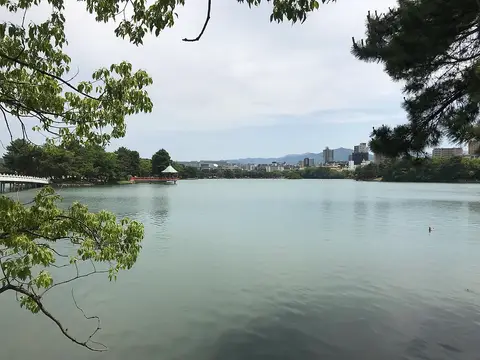 Itinerary · JapanFukuoka in 1 Night, 2 Days: A Short-Trip PlanFukuoka's airport is minutes from downtown by subway. One night: where to stay, a 2-day…
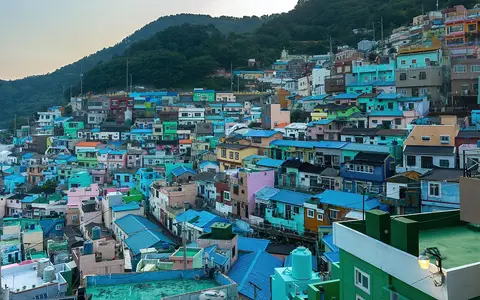 Itinerary · South KoreaBusan in 2 Days: Gimhae Airport to Haeundae and BeyondLight rail, limousine and taxi times and fares from Gimhae Airport to Haeundae and…
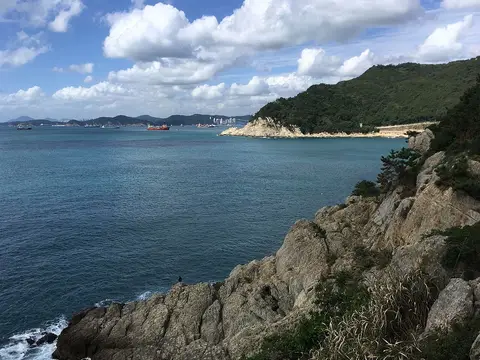 Comparison · South KoreaBusan vs Jeju: Which Should You Choose for a First Trip?Busan or Jeju for your Korea trip? Getting there and airport transfers, the guides' days…