Comparison · Australia
Sydney vs Melbourne: Which Should You Choose for a First Trip?
Harbour-and-beach Sydney or laneway-and-tram Melbourne? Airport transfers, trip length, daily budgets and January, April, July and October weather compared.

Published
The short answer
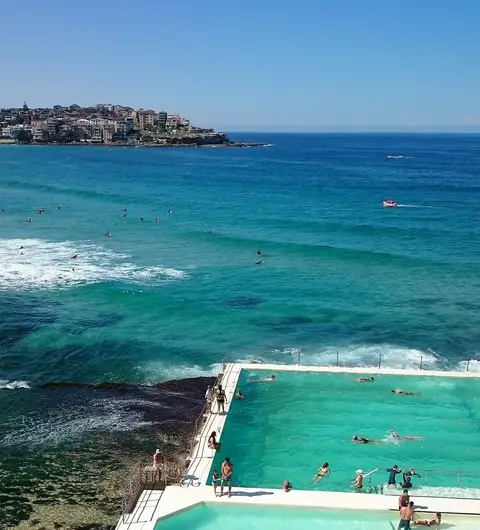
Sydney is a harbour city built around the Opera House and Harbour Bridge. Beaches like Bondi and Manly and national parks sit close to downtown, so much of the trip happens by ferry and on the water.
Melbourne is a cultural city in Australia's southeast, packed with graffiti lanes, cafes, galleries and parks, and easy to explore by tram. It's also the base for day trips to the Great Ocean Road and Phillip Island's little penguins.
Best for: Sydney suits couples and families after harbour views, beaches and coastal walks, and anyone who wants city life and the outdoors in one trip. Melbourne suits lovers of laneway cafes, galleries and street art, and travelers who want day trips for a coastal drive and penguin watching.
From the airport, and getting around
In Sydney, the Airport Link train is fastest, running from the international and domestic terminal stations straight to Central, Town Hall and Circular Quay. It's pricey for the distance because of the station access fee, and a taxi can beat it for groups of three or four with luggage. In the city, tap an Opal card, contactless bank card or phone on trains, buses, ferries, light rail and metro. Daily and weekly fare caps apply, with a lower daily cap from Friday to Sunday and on public holidays.
In Melbourne, SkyBus runs to Southern Cross Station, where you change to trams or trains. Part of the central city is a Free Tram Zone. Outside it, use a myki card or tap-and-go contactless payment; the bus rollout is progressive, so check official information. Always tap on outside the Free Tram Zone, as inspectors check fares.
The Melbourne guide notes that many flights from North Asia involve a connection. For either city, compare connection points and total travel time with airlines.

- Sydney Airport Link train: about 15-25 min, about 20-25 AUD incl. station access fee (check official)
- Sydney taxi: about 20-40 min, about 55-80 AUD
- Sydney rideshare (Uber, DiDi and others): about 20-40 min, about 45-70 AUD (varies by time of day)
- Melbourne SkyBus: about 20-40 min to the city, about A$22-26 (cheaper per trip with a return ticket; check official)
- Melbourne taxi or ride-hailing: about 30-45 min to the city, about A$60-90
How many days, and daily budgets
Both guides suggest 4 to 6 days; Melbourne's figure includes day trips. In each guide's 4-day itinerary, Sydney gives one day to the Blue Mountains and Melbourne gives one day to a Great Ocean Road day trip.
Both guides give daily budgets in Australian dollars. The figures below are exactly as each guide gives them, and the mid-range figures overlap.
- Sydney budget: about 120 AUD (hostel, supermarket and food courts, public transport)
- Sydney mid-range: about 300 AUD (4-star hotel, cafes and restaurants, tours)
- Sydney high-end: about 700 AUD+ (harbour-view luxury hotel, fine dining, BridgeClimb)
- Melbourne budget: about A$100-150 per day (hostel, groceries, public transport)
- Melbourne mid-range: about A$250-350 per day (city hotel, cafes, restaurants)
- Melbourne high-end: about A$600+ per day (luxury hotel, fine dining, private tours)
- Where to stay: Sydney's CBD/Circular Quay, The Rocks, Darling Harbour, Surry Hills, Bondi/Manly; Melbourne's central city (CBD), Southbank, Fitzroy and Collingwood, St Kilda
Weather side by side: January, April, July, October
Seasons are the reverse of the Northern Hemisphere's. Both guides pick spring (September-November) and autumn (March-May) as the best times. Summer (December-February) is hot in both: it's beach season in Sydney, with prices peaking over Christmas and New Year, and Melbourne gets occasional heatwaves. In winter (June-August) Sydney is cool and quieter, and Melbourne is chilly.
By the normals, Melbourne's highs and lows are lower than Sydney's in all twelve months, and it gets less rain every month. Sydney's wettest month is June at 143 mm and its driest is September at 63 mm; spring (September-November) gets less rain than Sydney's monthly average, and autumn (March-May) a little more. Melbourne's wettest month is November at 60 mm and its driest is July at 33 mm. Melbourne's weather changes quickly in a single day, so carry a layer.
These are the 1991–2020 normals for Sydney Observatory Hill station and Melbourne Airport station, from the Australian Bureau of Meteorology submission · WMO normals collection (NOAA NCEI). Check the official forecast before you go for this year's weather.
- January: Sydney high 27°C, low 20°C, rain 91 mm / Melbourne high 27°C, low 14°C, rain 39 mm
- April: Sydney high 24°C, low 15°C, rain 114 mm / Melbourne high 21°C, low 10°C, rain 42 mm
- July: Sydney high 18°C, low 9°C, rain 80 mm / Melbourne high 13°C, low 6°C, rain 33 mm
- October: Sydney high 24°C, low 15°C, rain 68 mm / Melbourne high 20°C, low 9°C, rain 49 mm
What you do there: city and day trips
In Sydney the harbour is the star. The Opera House is free to admire outside; go inside on a paid guided tour or for a performance. The Harbour Bridge walkway is free, and the Royal Botanic Garden and Mrs Macquarie's Chair frame both the Opera House and the Bridge. Manly Beach is about 30 minutes by ferry from Circular Quay, and Taronga Zoo is reached by ferry too. The Bondi to Coogee Coastal Walk is 6 km, about 2-3 hours. Blue Mountains National Park is about 2 hours by train, so plan a full day.
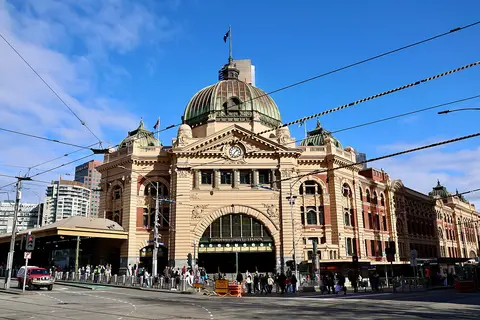
Melbourne is a city for walking, riding trams and exploring laneways. Graffiti lanes such as Hosier Lane, the yellow Flinders Street Station facing Federation Square, the free Royal Botanic Gardens and the National Gallery of Victoria (NGV), whose permanent collection is generally free, are all in or right by the city. Queen Victoria Market opens Tuesday, Thursday, Friday, Saturday and Sunday (closed Monday and Wednesday). St Kilda Beach is about 30 minutes by tram. The Great Ocean Road takes a full day, and on Phillip Island you watch the Penguin Parade at dusk; tickets are required, and photos and video are not allowed during the parade.
Both cities have a strong cafe culture. By the guides, a coffee is about 5-6 AUD in both; brunch is about 25-35 AUD in Sydney and about A$20-35 in Melbourne.

How to choose, and what to check before you go
Choose Sydney for harbour views, beaches, ferry trips and nature like the Blue Mountains. Choose Melbourne for laneway cafes, galleries, trams and day trips to the Great Ocean Road and Phillip Island. To visit both, split your days using each guide's 4-day itinerary, and check how to travel between the cities and how long it takes with airlines and transport operators' official information.
Australian entry requirements (an ETA, eVisitor or visa) depend on your passport. Check official Australian government information before you travel.
- Entry requirements and how to apply: official Australian government information
- Declare all food, meat, fruit and seeds on arrival; undeclared items can bring heavy fines
- UV is very strong: sunscreen, a hat and sunglasses even on cloudy days
- Swim only between the flags on patrolled beaches (Sydney guide: red and yellow flags; rip currents are common)
- Tipping isn't required, and some restaurants add a Sunday or public holiday surcharge
Plan your Sydney trip
We never take payment — compare, then book on the official partner site.
Plan your Melbourne trip
We never take payment — compare, then book on the official partner site.
FAQ
Sydney or Melbourne for a first trip to Australia?
Pick Sydney for harbour views, beaches and ferries, and Melbourne for laneway cafes, galleries, trams and nature day trips. Both guides recommend spring (September-November) and autumn (March-May).
How many days does each need?
Both guides suggest 4 to 6 days, with Melbourne's figure including day trips. To visit both, split your days using each guide's 4-day itinerary.
Is Melbourne much colder than Sydney?
By the normals, Melbourne's highs and lows are lower than Sydney's in all twelve months. The July high is 18°C in Sydney and 13°C in Melbourne (BoM submission · WMO normals, 1991–2020).
Which city gets more rain?
By the normals, Sydney gets more rain than Melbourne every month. Sydney's wettest month is June at 143 mm; Melbourne's is November at 60 mm.
Related reading
 Itinerary · AustraliaSydney for the first time: airport to city, and how many days do you need?Sydney airport to city by Airport Link train, taxi or rideshare with times and fares, a…
 Itinerary · AustraliaMelbourne for the first time: airport to city, and how many days?SkyBus or taxi from Melbourne Airport, the Free Tram Zone and myki, a 4 to 6 day plan,…
 ComparisonAirport to City: Train, Bus, Taxi or Transfer? A Practical ComparisonCompare the five ways to get from the airport into town, with tips for late-night…