Comparison · Japan
Kumamoto vs Kagoshima: Which Should You Choose for a First Trip?
Kumamoto's castle and Mount Aso, or Kagoshima's Sakurajima and sand baths? Airport transfers, days, budgets, same-month weather and sights compared.

Published
The short answer
Kumamoto is a city in the heart of Kyushu. Kumamoto Castle, one of Japan's three great castles, and the Suizenji Jojuen garden are in the city, and it is the gateway to Mount Aso, one of the world's great calderas. Add grassland drives around Aso, Kurokawa Onsen and local food like horse sashimi and Kumamoto ramen.
Kagoshima sits at Kyushu's southern tip, facing Sakurajima, a volcano island that still puffs smoke across the bay. The ferry from the city port reaches Sakurajima in about 15 minutes, and you can add Ibusuki's sand baths, Kirishima's hot springs and black pork dishes.
Best for: Kumamoto suits travelers who want castle walks, a volcano crater and grassland drive, and bath-hopping in a mountain hot-spring village in one trip. Kagoshima suits those who want to take a ferry to a volcano island, try a sand bath and eat black pork.

Getting there and airport to city
Kumamoto's gateway is Aso Kumamoto Airport (KMJ). The airport limousine bus to the city center (Sakuramachi and Kumamoto Station) is the usual choice. You can also take the Airport Liner to JR Higo-Ozu Station and change to the JR Hohi Line, which is handy for heading to Aso too. If you are going straight to Aso or Kurokawa Onsen, renting a car at the airport is easiest.
Kagoshima Airport (KOJ) is in Kirishima, well north of the city. The limousine bus to Kagoshima-Chuo Station and Tenmonkan is easiest, and a bus also runs from the airport to the Kirishima hot-spring villages, handy if you start with a soak. At both airports, taxis to the city are expensive.
Check flight schedules with the airlines. Recent fares are on the route pages at the end of this article.
- Kumamoto airport limousine bus: about 55 min to Sakuramachi, about 1 hour 5 min to Kumamoto Station, about 1,400 JPY
- Kumamoto Airport Liner + JR: about 15 min by Liner to Higo-Ozu Station, about 50 min to 1 hour to Kumamoto Station; Liner about 200 JPY plus the JR fare (check official information)
- Kumamoto taxi: about 40 min to the city, about 5,000-7,000 JPY
- Kagoshima airport limousine bus: about 40-55 min to Kagoshima-Chuo Station, about 1,300-1,500 JPY
- Kagoshima airport → Kirishima Onsen bus: about 40 min to 1 hour depending on the stop (check official information), about 1,000 JPY
- Kagoshima taxi: about 40 min to the city, about 12,000 JPY+
How many days and what budget
The guides suggest 3 to 4 days for both cities.
In Kumamoto, see the castle and the food street below it on day 1, with horse sashimi and ramen in Shimotori in the evening. On day 2, drive to Aso for the Nakadake crater (check access) and Kusasenri, then spend the night at Kurokawa Onsen; on day 3, visit Takachiho Gorge or return to the city for Suizenji Jojuen. In Kagoshima, plan Shiroyama Observatory and black pork in Tenmonkan on day 1, the ferry to Sakurajima (check volcano information) and Sengan-en in the afternoon on day 2, a drive to Ibusuki's sand baths and Chiran on day 3, and Kirishima Shrine and a hot spring before the airport on the last day.
Below are the daily budgets exactly as each guide gives them. The amounts are the same in all three tiers; only what they include differs a little. Kumamoto's mid-range budget includes a day's car rental, while Kagoshima's high-end budget includes a rental car.
- Budget: Kumamoto about 7,000 JPY per day (business hotel, ramen, streetcar); Kagoshima about 7,000 JPY per day (business hotel, local restaurants, streetcar)
- Mid-range: Kumamoto about 14,000-20,000 JPY per day (city hotel, restaurants, a day's car rental); Kagoshima about 14,000-20,000 JPY per day (city hotel, black pork dinner, hot-spring entry)
- High-end: Kumamoto about 35,000 JPY+ per day (hot-spring ryokan, set-course dinners); Kagoshima about 35,000 JPY+ per day (hot-spring ryokan, set-course dinners, rental car)
Weather by month, side by side
The two guides' best seasons overlap. Kumamoto's are late March-April (cherry blossoms around the castle) and October-November (Aso's pampas grass and autumn leaves); Kagoshima's are the mild, clear months of March-May and October-November. So we compare April, October and November, the months both guides recommend.
The figures are 1991–2020 normals from the Japan Meteorological Agency: Kumamoto station for Kumamoto and Kagoshima station for Kagoshima. Each line shows average high / average low / monthly precipitation.
In all three months Kagoshima's highs and lows are a little higher than Kumamoto's, and its precipitation is higher too. In both cities, October and November get less rain than April. Over the whole year, June is the wettest month in both cities (Kumamoto 449mm, Kagoshima 570mm).
Both guides list June to early July as the rainy season and say typhoons may come in August-September. In Kumamoto, summers are hot though the Aso highlands are cooler, and winter brings snow and icy roads to Aso. In Kagoshima, wind direction often brings volcanic ash onto the city in summer, and winters are relatively mild. Normals are long-term averages, not this year's weather, so check the forecast before you go.
- April: Kumamoto 21°C / 11°C / 145mm, Kagoshima 22°C / 13°C / 195mm
- October: Kumamoto 25°C / 15°C / 87mm, Kagoshima 26°C / 18°C / 105mm
- November: Kumamoto 19°C / 9°C / 84mm, Kagoshima 21°C / 12°C / 103mm
What you do there: sights, food and getting around
Kumamoto Castle is still being restored after the 2016 earthquake, so check official information for accessible areas and hours. Right below the castle is a street of local food and souvenir shops, and Suizenji Jojuen is a garden with a pond and a hill modeled on Mount Fuji. In Aso, about 1 hour 30 minutes by car from the city, you can see the Nakadake crater up close and drive across the Kusasenri grassland with its grazing horses. Kurokawa Onsen is known for its bath-hopping pass, and Amakusa and Takachiho Gorge are further day trips.
In Kagoshima, take the ferry to Sakurajima for its lookouts and lava trails. In the city, Sengan-en Garden with Sakurajima as its backdrop, Shiroyama Observatory overlooking the city, the bay and Sakurajima, and the harborside Kagoshima City Aquarium are the main sights. In Ibusuki to the south you lie buried in warm sand at the sand baths, and Kirishima Shrine in the forest pairs well with Kirishima Onsen. Chiran, with its old samurai residences, is about 1 hour by car from the city, and the World Heritage island of Yakushima is reached by boat or plane, so allow at least 1 night.
For food, Kumamoto has horse sashimi (basashi), Kumamoto ramen in rich pork-bone broth, karashi renkon, akaushi beef bowls from Aso and ikinari dango. Kagoshima has black pork tonkatsu and shabu-shabu, satsuma-age, Shirokuma shaved ice, charcoal-grilled chicken and sweet potato shochu. Undercooked chicken carries a food-poisoning risk, so choose fully cooked dishes.


- Kumamoto transport: the streetcar linking Kumamoto Station, the castle area and downtown is the backbone, and it accepts national IC cards such as Suica as well as contactless credit cards. Since November 2024, city buses no longer accept national IC cards; use a contactless credit card or cash.
- Kagoshima transport: the streetcar linking Kagoshima-Chuo Station, Tenmonkan and the port area is the backbone, and a sightseeing bus loops past Sengan-en, Shiroyama Observatory and the port. The Sakurajima ferry takes about 15 minutes and sails frequently.
- Rental car: public transport to Aso, Kurokawa and Takachiho, and to Ibusuki, Chiran and Kirishima, is sparse, so a car helps. Japan drives on the left, and you need an International Driving Permit.
- Volcanoes: Mount Aso and Sakurajima are both active volcanoes. Check alert levels and access with the Japan Meteorological Agency and local official information on the day, and avoid the Aso crater if you have respiratory or heart conditions.
- Volcanic ash falls on some days in Kagoshima. Bring a mask, and contact-lens wearers may prefer glasses.
How to choose, and combining the two
If you want a castle and garden, a volcano crater and grassland drive, and bath-hopping in a mountain hot-spring village, Kumamoto fits well. If you want a ferry ride to a volcano island, sand baths and black pork, Kagoshima fits well.
The two cities are linked by the Kyushu Shinkansen. Neither guide gives the Shinkansen travel time or fare, so check official information. Winter brings snow and ice to the Aso highlands, so check whether your rental car has winter tires, and typhoons in August-September can stop ferries and flights, so leave slack in your plans.
Entry procedures and online arrival forms can change, so check Japanese government or embassy information before you travel.
- At hot springs, wash before entering the bath; some facilities restrict guests with tattoos.
- Earthquakes are common in the Kumamoto region. Read your hotel's evacuation information once.
- Book Kurokawa Onsen stays early, and check bath-pass prices and baths with official information.
- Check hours and fees for Ibusuki's sand baths on the facility's official information.
Plan your Kumamoto trip
We never take payment — compare, then book on the official partner site.
Plan your Kagoshima trip
We never take payment — compare, then book on the official partner site.
FAQ
Kumamoto or Kagoshima for a first visit?
Choose Kumamoto for its castle, the Aso volcano and grassland drives, and mountain hot-spring villages, or Kagoshima for the ferry to the volcano island of Sakurajima, sand baths and black pork. The guides suggest 3 to 4 days for either.
Which needs a bigger budget?
The two guides give the same daily amounts: about 7,000 JPY on a budget, about 14,000-20,000 JPY mid-range and about 35,000 JPY+ high-end. Kumamoto's mid-range figure includes a rental car, while Kagoshima's high-end figure does.
When is the best time to go?
Both guides pick October-November; for spring, Kumamoto's guide picks late March-April and Kagoshima's March-May. In the same months' normals, Kagoshima is a little warmer than Kumamoto and gets more precipitation. June to early July is the rainy season, and typhoons may come in August-September.
Can I visit both cities on one trip?
The two cities are linked by the Kyushu Shinkansen; check travel time and fares with official information. For volcano information on Mount Aso and Sakurajima, check the Japan Meteorological Agency and local official information on the day.
Related reading
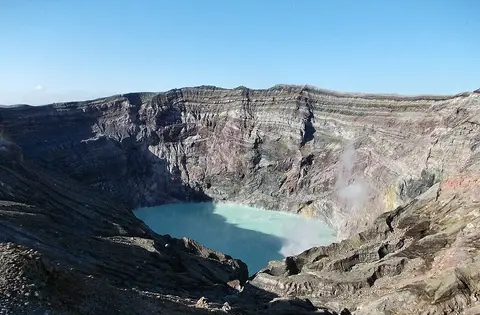 Itinerary · JapanFirst time in Kumamoto: airport to city, and how many days do you need?Airport limousine to Sakuramachi in about 55 min, a 3 to 4 day plan, paying on…
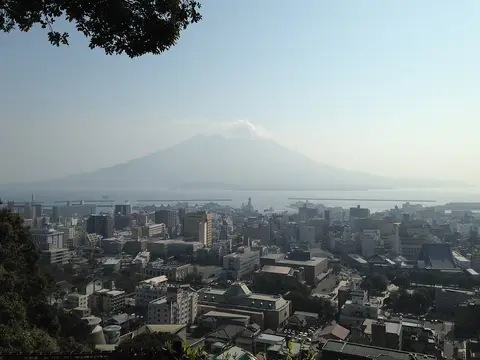 Itinerary · JapanFirst time in Kagoshima: how do you get from the airport to the city, and how many days do you need?Kagoshima Airport to city by limousine bus (about 40-55 min, about 1,300-1,500 JPY), the…
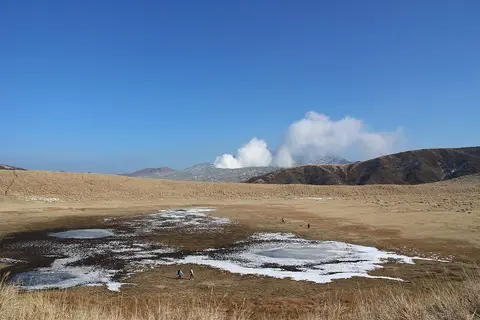 Tips · JapanRenting a Car in Kumamoto: Is It Worth It, and What to Prepare for AsoSkip the car in Kumamoto city, rent one for Aso, Kurokawa Onsen and Takachiho: left-side…