Itinerary · Vietnam
How Many Days in Da Nang? A 4-Day Route with Hoi An
My Khe Beach, the Dragon Bridge, Ba Na Hills, the Marble Mountains, Hoi An's lanterns and Han Market: Da Nang day by day, plus how to add a fifth day.

Published
How many days? The 4-day plan and where to stay
Four to five days, including Hoi An, suits Da Nang. The airport is very close to the city, so you can start sightseeing on arrival day. Following the guide's itinerary, this plan covers My Khe Beach and the Han River on day 1, Ba Na Hills on day 2, the Marble Mountains and Hoi An on day 3, and Linh Ung Pagoda, the Pink Church and Han Market on day 4 before heading to the airport.
For a first visit or a beach holiday, the My Khe Beach area is the easiest all-round choice. Seafront hotels and seafood restaurants line the beach, close to both downtown and the airport. For value and city sights, the Han River (downtown) area puts the Dragon Bridge, Han Market and the Pink Church within walking distance, about 10 minutes by car from the beach.
For resort stays with easy Hoi An access, there is Non Nuoc Beach to the south; for quiet luxury resorts, the Son Tra Peninsula, home to Linh Ung Pagoda. Non Nuoc Beach needs a car for city sightseeing, though, and Son Tra is less convenient for the city.
Day 1: Airport, My Khe Beach, then the Han River and Dragon Bridge at night
Da Nang International Airport (DAD) is very close to the city: about 10-20 minutes to downtown or My Khe Beach. A ride-hailing car has its fare fixed in the app, so there is no haggling, at about 80,000-150,000 VND. For a metered taxi, take a reputable company's taxi from the official rank and make sure the meter is on; expect about 100,000-200,000 VND.
After checking in, spend the afternoon at My Khe Beach, Da Nang's signature stretch of fine sand. Sunset is nicer for a walk than the harsh midday sun. For dinner, beachfront seafood restaurants let you choose from tanks and charge by weight, so confirm the price per kilo and any cooking charges before ordering.
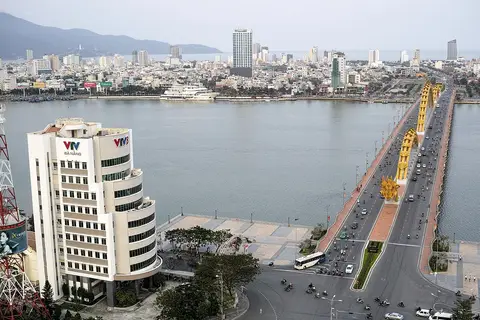
In the evening, walk the Han River promenade and the Dragon Bridge, a dragon-shaped bridge over the Han River that lights up at night. According to the official tourism site, the dragon breathes fire and water on Friday, Saturday and Sunday nights and on holidays, but shows are sometimes paused for events, so check the time locally. When crossing streets, walk slowly at a steady pace.

Day 2: A full day at Ba Na Hills (Golden Bridge)
Day 2 goes entirely to Ba Na Hills, a mountaintop theme park reached by a long cable car and famous for the bridge held up by giant hands (the Golden Bridge). Tickets are pricey, and the guide's budget puts Ba Na Hills in the highest tier.
It can be cloudy and cool at the top. Leave early and bring a layer.
Back in town for dinner, have mi quang or pho. Mi quang is Da Nang's signature dish of wide rice noodles in a little rich broth, topped with peanuts and rice crackers, at about 30,000-60,000 VND at local spots.
Day 3: Marble Mountains in the morning, Hoi An Old Town and lanterns later
Start at the Marble Mountains, with cave temples and viewpoints inside marble hills. There are many steps, so wear good shoes; an elevator covers part of the climb.
In the afternoon, head to Hoi An, about 45 minutes by car from central Da Nang. Ride-hailing, hotel shuttles and tour vehicles are common. Hoi An Old Town is a former trading port of yellow walls and lanterns, and some old-town sights require an entry ticket.
The riverside lanterns are loveliest in the evening. Hoi An is known for its banh mi and thick-noodle cao lau; banh mi costs about 20,000-50,000 VND. To enjoy the lantern-lit old town at a relaxed pace, consider spending a night or two in Hoi An.

Day 4: Linh Ung Pagoda, the Pink Church, Han Market, then the airport
On the last morning, visit Linh Ung Pagoda on the Son Tra Peninsula, with a huge Lady Buddha statue facing the sea and sweeping views of the coastline. Then see Da Nang Cathedral (the Pink Church), a photogenic pink church; visits may be limited during Mass.
In the afternoon, shop for dried fruit, coffee and souvenirs at Han Market. Bargaining is normal, and markets, stalls and local eateries need cash, so carry a mix of small notes rather than only large ones. Finish with a massage, then head to the airport, about 10-20 minutes from downtown or My Khe Beach.

One more day: 5 days with a night or two in Hoi An
The guide recommends 4 to 5 days in Da Nang, including Hoi An. With an extra day, stay a night or two around Hoi An Old Town and enjoy the lantern-lit evenings at a relaxed pace.
If you go straight to Hoi An on arrival, a ride-hailing car or a hotel or pre-booked car takes you there directly in about 45-60 minutes for about 350,000-500,000 VND. For resort stays plus Hoi An access, Non Nuoc Beach is a quiet beach lined with large resorts, but you will need a car for city sightseeing.
Before you go: getting around, budget and when to go
Ride-hailing cars and motorbikes are the default way around Da Nang. a motorbike ride-hail is cheapest for short hops; book a car with family or luggage. Green electric taxis can be booked in the app or hailed on the street, with transparent fares. For metered taxis, choose a well-known company and check that the meter is on. Riding a motorbike yourself requires a licence recognized in Vietnam, and accidents without one may not be covered by travel insurance.
Per person per day, budget about 700,000 VND (guesthouse, local food, a motorbike ride-hail), about 2,000,000-2,500,000 VND (beach hotel, restaurants, massage) or about 5,000,000 VND and up (resort, Ba Na Hills, private car). Don't drink tap water; buy bottled water. The sun is strong, so bring sunscreen and a hat.
According to the guide, the dry season from February to May is the most comfortable, and June to August is hot but has less rain, good for the beach. September to December is the rainy season; of these months, October and November bring heavy rain and typhoons that can disrupt plans. WMO World Weather Information Service (Viet Nam Meteorological and Hydrological Administration) normals for Da Nang, 1991–2020, show about 22-71 mm of rain per month from February to May and about 68-167 mm from June to August. By contrast, September gets about 394 mm, October about 658 mm, November about 486 mm and December about 272 mm. Daytime highs rise from about 25°C in January to about 35°C in June.
- Best time: February to May, or June to August for a beach trip
- Plan with care: September to December; of these, October and November can see plans disrupted by heavy rain and typhoons
- Flights and hotels get much pricier in the summer peak
- Entry and visa rules can change, so check official sources before you travel
Plan your Da Nang trip
We never take payment — compare, then book on the official partner site.
FAQ
How many days do I need in Da Nang?
Four to five days, including Hoi An. Four days lets you split My Khe Beach, Ba Na Hills, the Marble Mountains and Hoi An, and Linh Ung Pagoda and Han Market into one day each; stretch to five if you want a night or two in Hoi An.
How long is the ride from the airport to the city?
The airport is very close to the city: about 10-20 minutes to downtown or My Khe Beach. A ride-hailing car costs about 80,000-150,000 VND and a metered taxi about 100,000-200,000 VND.
How do I get to Hoi An?
It is about 45 minutes by car from central Da Nang, and ride-hailing cars, hotel shuttles and tour vehicles are common. Straight from the airport, a ride-hailing car or booked car takes about 45-60 minutes for about 350,000-500,000 VND.
Is September to December a good time to go?
September to December is the rainy season, and of these months October and November bring heavy rain and typhoons that can disrupt plans. In the normals, October is the wettest at about 658 mm. If you go then, see our Da Nang rainy-season article.
Related reading
 Tips · VietnamDa Nang in the Rainy Season (Sep-Dec): Should You Go?Da Nang is rainy September-December, with typhoons most likely in October-November.…
 Comparison · VietnamHanoi vs Da Nang: Which Should You Choose for a First Trip to Vietnam?Vietnam's historic capital or the central beach city near Hoi An? Who each suits,…
 Comparison · VietnamNha Trang vs Da Nang: Which Vietnam Beach City Suits You?Nha Trang or Da Nang? Compare seasons, beaches, day trips, airport transfers and budget…