Comparison · Thailand
Chiang Mai vs Chiang Rai: Which Should You Choose for a First Trip to Northern Thailand?
Chiang Mai or Chiang Rai? Who each northern Thai city suits, airport transfers and the bus between them, days and budget, and month-by-month weather.

Published
The short answer
Chiang Mai is the old capital of the Lanna kingdom in the hills of northern Thailand, with a moated Old City full of temples. Many travelers stay longer for cafes, night markets, cooking classes and mountain scenery, and you can choose a base by mood: the Old City, Nimman, or the Night Bazaar and Ping River area.
Chiang Rai is Thailand's northernmost province. Visitors come for its striking art temples — the all-white Wat Rong Khun (White Temple), the blue Wat Rong Suea Ten (Blue Temple) and the black buildings of Baan Dam Museum — and for the Golden Triangle, where Thailand, Laos and Myanmar meet. It is smaller and quieter than Chiang Mai, good for an unhurried trip.
Best for: Chiang Mai suits a first trip to northern Thailand and travelers who want temple walks plus night markets, cafes and cooking classes. Chiang Rai suits those who come for the art temples and border views, and anyone who prefers a smaller, quieter, slower trip.

Airport to town, and between the two
Chiang Mai International Airport (CNX) is just south-west of the Old City. Grab or Bolt fares are fixed in the app, so no haggling; at the official taxi counter in arrivals, say where you are going and confirm the set fare before you get in.
At Mae Fah Luang-Chiang Rai International Airport (CEI), the taxi counter is by Entrance 3 on the ground floor of the terminal. The official airport site lists a flat fare within Chiang Rai city; confirm it before you get in. Chiang Rai is also on Grab's official list of service areas.
The Chiang Rai guide notes that flights from Korea usually connect via hubs such as Bangkok, and that you can also fly into Chiang Mai (CNX), which has more flights, and continue by intercity bus or car. Routes and schedules change often, so check with the airline.
- Chiang Mai, Grab or Bolt: about 15-20 min to the Old City or Nimman, about 150-250 THB
- Chiang Mai airport taxi: about 15-20 min to town, flat fare (confirm at the counter)
- Chiang Mai songthaew (red truck): about 20 min to town, about 100-200 THB (agree before boarding)
- Chiang Mai airport shuttle bus: about 40 THB (check routes and hours on the official airport site)
- Chiang Rai airport taxi (official counter): about 150 THB flat within the city (check official)
- Chiang Rai, Grab and other ride-hailing apps: fare shown in the app; follow the app for the pick-up point
- Chiang Mai → Chiang Rai: the Tourism Authority of Thailand says the Green Bus takes about 3 hours (check times and fares with the operator)
How many days, and what budget?
The guides suggest 4 to 5 days for Chiang Mai and 3 to 4 days for Chiang Rai.
Both guides give the same daily budget levels per person. Rather than one being cheaper, what goes into the budget differs: Chiang Mai's mid-range figure includes one tour and a massage, while Chiang Rai's includes ride-hailing and temple fees.
In both cities, hiring a car with driver for a half or full day is easiest for far-flung sights: Doi Suthep and Doi Inthanon from Chiang Mai, the Golden Triangle and Doi Tung from Chiang Rai. Agree on the route, hours and price first.
- Budget: about 1,000 THB per day in both (guesthouse, local food, songthaew)
- Mid-range: Chiang Mai about 2,500-3,500 THB (hotel, restaurants, one tour, massage); Chiang Rai about 2,500-3,500 THB (hotel, restaurants, ride-hailing, temple fees)
- Comfort: about 6,000 THB+ per day in both (resort, car with driver, private tours)
- Khao soi, the north's signature noodles: about 60-100 THB at local spots in both
Weather by month — November to February is best
Both guides call November to February cool and dry, the best time to go, and in Chiang Rai December and January are the coolest. In the climate normals for November to February, Chiang Rai is a little cooler than Chiang Mai in the same month, for both highs and lows.
March and April are very hot in both. Around February to April, smoke from forest fires can make the air very poor. Check official air-quality information (the air quality index) before and during your trip, and bring a mask or change dates if you have breathing problems.
May to September is rainy in both, and August is the wettest month of the year. Afternoon showers are common, but the hills are green. In Chiang Mai, the lantern festival around the November full moon fills hotels fast and pushes prices up.
Temperatures and rainfall are 1991–2020 normals for Chiang Mai station and Chiang Rai station (Thai Meteorological Department submission · WMO normals collection (NOAA NCEI)), rounded to whole numbers. Order: average high, average low, monthly rainfall.
- November: Chiang Mai 31°C, 20°C, 41 mm / Chiang Rai 30°C, 18°C, 45 mm
- December: Chiang Mai 29°C, 17°C, 14 mm / Chiang Rai 28°C, 15°C, 21 mm
- January: Chiang Mai 30°C, 16°C, 11 mm / Chiang Rai 29°C, 14°C, 17 mm
- February: Chiang Mai 33°C, 17°C, 10 mm / Chiang Rai 31°C, 15°C, 13 mm
- April (hottest month): Chiang Mai 37°C, 23°C, 54 mm / Chiang Rai 35°C, 21°C, 93 mm
- August (wettest month): Chiang Mai 32°C, 24°C, 223 mm / Chiang Rai 31°C, 24°C, 373 mm
What you do there — temples and mountains, art temples and borders
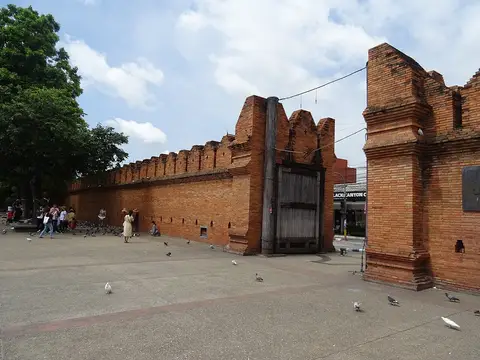
In Chiang Mai you walk between Wat Phra Singh and Wat Chedi Luang in the Old City and go up to Wat Phra That Doi Suthep on the mountain overlooking the city. There is the Sunday Walking Street from Tha Phae Gate, the Saturday Walking Street along the silversmith street, and the Night Bazaar every night. Doi Inthanon National Park, on Thailand's highest mountain, elephant sanctuaries with no riding or shows, and cooking classes are also popular.
In Chiang Rai you combine Wat Rong Khun (White Temple), Baan Dam Museum and Wat Rong Suea Ten (Blue Temple) in one day, and walk around the Clock Tower and Wat Phra Kaew in town. On Saturdays a Walking Street runs along Thanalai Road from 4 pm to midnight. The guide's itinerary includes a full day by hired car to Doi Tung, the Golden Triangle and the Hall of Opium.
Khao soi and sai ua are easy to find in both. The Chiang Mai guide highlights gaeng hang lay, a northern pork curry that is not very spicy, and the Chiang Rai guide highlights khanom jeen nam ngiao, rice noodles in a tangy broth.


How to choose, or do both
Chiang Mai's airport is close to town, and temples, night markets, mountains and activities are all in one city. If the art temples and border views are what you are after, add Chiang Rai.
To do both, fly into Chiang Mai (CNX) and continue to Chiang Rai by bus or car. The Golden Triangle is far from town, so some travelers stay a night around Chiang Saen and combine it with Doi Tung.
Thai entry rules and procedures can change, so check Thailand's embassy or immigration website before you travel. The Golden Triangle is a border area: crossing into Laos or Myanmar requires formal immigration procedures, and you should check your government's travel advice for neighbouring countries.
- At temples, cover shoulders and knees and take off your shoes before entering halls
- Tell songthaew and tuk-tuk drivers your destination and agree on the fare before you get in
- The roads to Doi Suthep, Doi Inthanon and Doi Tung are winding, so prepare if you get car-sick
- Riding a scooter yourself requires a licence recognized in Thailand and a helmet; accidents without a licence may not be covered by travel insurance
- Releasing sky lanterns during the festival is regulated and may need permission depending on the place, so check official notices
Plan your Chiang Mai trip
We never take payment — compare, then book on the official partner site.
Plan your Chiang Rai trip
We never take payment — compare, then book on the official partner site.
Services mentioned in this article
Affiliate links. You book on each company’s official site — OneWorld never takes payment.
Full Chiang Mai travel guide →
FAQ
Chiang Mai or Chiang Rai for a first visit?
Chiang Mai is the easy pick: the airport is close to town, and temples, night markets, mountains and activities are all in one city. If art temples and border views are the goal, Chiang Rai is great too.
How do I get from Chiang Mai to Chiang Rai?
By intercity bus or car. The Tourism Authority of Thailand says the Green Bus takes about 3 hours; check times and fares with the operator.
When is the best time to go?
November to February, cool and dry, is best in both. Around February to April, smoke from forest fires can make the air very poor, so check official air-quality information before and during your trip.
Which one costs more?
Both guides give the same daily budgets per person: about 1,000 THB on a budget, about 2,500-3,500 THB mid-range and about 6,000 THB+ for comfort. Only what the mid-range figure covers differs a little.
Related reading
 Itinerary · ThailandChiang Mai in 4 Days: Plan Around the Night MarketsOld City temples, Doi Suthep, the Saturday and Sunday Walking Streets and Doi Inthanon:…
 Itinerary · ThailandChiang Rai first trip: how do you get from the airport, and how many days do you need?Chiang Rai airport to town by taxi (about 150 THB flat) or Grab, a 4-day route with the…
 Comparison · ThailandWhere to Go in Thailand? Bangkok, Phuket and Chiang Mai Compared — City, Sea and MountainsFirst trip to Thailand — Bangkok, Phuket or Chiang Mai? We compare who each suits, top…