Comparison · Japan
Takamatsu vs Matsuyama: Which Should You Choose for a First Trip?
Takamatsu's art islands and udon, or Matsuyama's hot springs and castle? Airport transfers, days, budgets, same-month weather and sights compared.

Published
The short answer
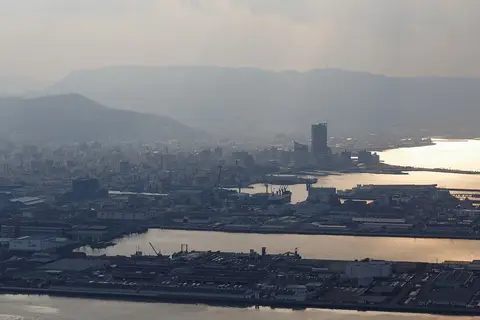
Takamatsu is a port city in Kagawa on Shikoku and the home of sanuki udon. Boats leave here for the Seto Inland Sea art islands of Naoshima and Teshima, and the city has Ritsurin Garden, a vast Japanese garden of pines and ponds.
Matsuyama is the main city of Ehime on Shikoku, home to Dogo Onsen, one of Japan's oldest hot springs, and a hilltop castle. The airport is close and the city compact, so it is easy to combine a relaxed onsen stay with island cycling.
Best for: Takamatsu suits travelers who want to hop between art islands by boat, stroll a garden and work through udon shops. Matsuyama suits travelers who want to stay in a hot-spring town, see a castle and an old temple, and add nearby trips such as the Shimanami Kaido cycle route or the old streets of Uchiko.

Getting there and airport to city
Takamatsu Airport (TAK) is south of the city, and limousine buses run to Takamatsu Station and downtown. You can also fly into Okayama Airport (OKJ), take the airport bus to Okayama Station, then a rapid train across the Seto Ohashi Bridge to Takamatsu. The highway bus between Kansai Airport and Takamatsu is currently suspended, so check official information for any restart.
Matsuyama Airport (MYJ) is close to town. Limousine buses run to Matsuyama Station, downtown and Dogo Onsen, and because the city is close, a taxi is reasonable for groups. A rental car from the airport is handy if you plan to explore the Shimanami Kaido or Uchiko.
Flights can vary by season, so check airline schedules.
- Takamatsu Airport limousine bus: about 45 min to Takamatsu Station, about ¥1,000
- Okayama Airport → Takamatsu Station (airport bus + rapid train): about 1 hour 30 min to 2 hours, about ¥2,500-3,000
- Matsuyama Airport limousine bus: about 15-25 min to the city, 40 min to Dogo Onsen, about 1,000-1,200 JPY (slightly less with cashless payment)
- Matsuyama taxi: about 15-20 min to the city (check official fares)
How many days and what budget
Both guides suggest 3 to 4 days; for Takamatsu that includes the islands.
In Takamatsu, the guide's plan is Tamamo Park, udon and an evening arcade stroll on day one, a morning boat to Naoshima on day two, Ritsurin Garden and the Yashima views on day three, and the Kotohiragu steps (or Shodoshima) on day four. In Matsuyama, it is a ryokan night in Dogo Onsen with an evening bath at the Honkan, then Ishiteji, the Botchan Train and Matsuyama Castle, then a short Shimanami Kaido ride or Uchiko and a Shimonada Station sunset, and finally souvenirs before the airport.
Below are the daily budgets per person exactly as the two guides give them. At all three levels, the Takamatsu guide's figures are higher than the Matsuyama guide's.
- Budget: Takamatsu about ¥8,000-12,000 (business hotel, udon, trains); Matsuyama about 7,000 JPY (business hotel, udon, streetcar)
- Mid-range: Takamatsu about ¥18,000-28,000 (nicer hotel, island trips, museums); Matsuyama about 14,000-20,000 JPY (city hotel, restaurants, onsen entry)
- High-end: Takamatsu about ¥50,000+ (ryokan, island resort); Matsuyama about 35,000 JPY+ (Dogo Onsen ryokan, set-course dinners)
Weather by month, side by side
The two guides pick similar times. Takamatsu's guide names March-May and October-November; Matsuyama's names late March-April for cherry blossoms and October-November. So April, October and November, picked by both, are shown side by side.
Figures are 1991–2020 normals from the Japan Meteorological Agency: Takamatsu station for Takamatsu and Matsuyama station for Matsuyama. Each line shows average high / average low / monthly rainfall.
Temperatures are almost the same in all three months. In April and November Matsuyama gets more rain than Takamatsu, while in October Takamatsu gets slightly more than Matsuyama. Of these three months, November has the lowest rainfall in both cities.
Takamatsu's guide says summers are hot and humid. Matsuyama's guide notes that June to early July is the rainy season, that typhoons may come in August-September, and that cyclists on the islands should watch the heat in summer. Normals are long-term averages, not a forecast, so check the weather forecast before you go.
- April: Takamatsu 20°C / 10°C / 75 mm, Matsuyama 20°C / 10°C / 107 mm
- October: Takamatsu 23°C / 15°C / 120 mm, Matsuyama 24°C / 15°C / 113 mm
- November: Takamatsu 18°C / 9°C / 55 mm, Matsuyama 18°C / 10°C / 71 mm
What you do there: sights, food and getting around
Takamatsu is all about the islands. Naoshima is the art island famous for museums and outdoor works, Teshima is a quiet island with a museum set among terraced rice fields and sea views, and Shodoshima is a large island known for its olive park, sea views and gorge scenery. The Setouchi Triennale art festival is held on the islands every three years in spring, summer and autumn; check official information for years and dates. In town there is Ritsurin Garden with boat rides on the pond, Tamamo Park (Takamatsu Castle ruins) with a seawater moat, and the flat-topped Yashima plateau with views over the Inland Sea islands. About an hour by Kotoden, Kotohiragu Shrine is reached by 785 steps.
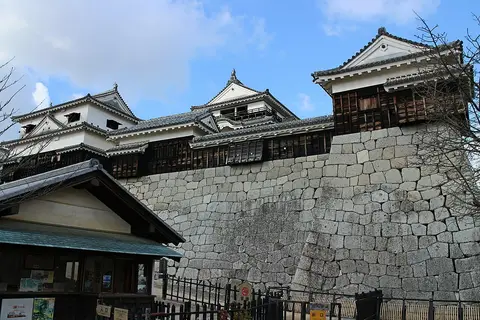
Matsuyama centers on Dogo Onsen. The Dogo Onsen Honkan, a historic wooden public bathhouse, is busy in the evening and calmer early (check official information for bathing options, open areas and hours). Matsuyama Castle keeps its original keep on a hilltop with views over the city and sea; ride the ropeway or a single-seat chairlift, or walk up. Ishiteji, an old temple on the Shikoku pilgrimage route, is within walking distance of Dogo Onsen, and Bansuiso is a French-style old mansion. Nearby are the Shimanami Kaido cycle route across islands and bridges, the old merchant street of Uchiko about 30 minutes by JR limited express, and tiny seaside Shimonada Station. Uchiko's wooden Uchiko-za theater is closed long-term for repairs (reopening planned for spring 2029).
For food, Takamatsu has sanuki udon (about ¥300-800), honetsuki-dori roasted chicken leg on the bone, Inland Sea seafood such as sea bream and yellowtail, Shodoshima olive dishes and wasanbon sweets. Matsuyama has taimeshi sea bream rice, jakoten fried fish cakes, nabeyaki udon in a sweetish broth, citrus juice and desserts, and Botchan dango.


- Takamatsu transport: island boats leave from Takamatsu Port, about 5-10 minutes' walk from JR Takamatsu Station. In town, use the Kotoden railway, JR and buses; downtown is flat and good for rental bikes.
- Takamatsu → islands (adult one-way): Naoshima (Miyanoura) ferry about 50 min, ¥680, fast boat about 30 min, ¥1,590 / Shodoshima (Tonosho) ferry about 60 min, ¥700, fast boat about 35 min, ¥1,400
- Matsuyama transport: the streetcar linking Matsuyama Station, downtown and Dogo Onsen is the backbone, and nationwide IC cards such as ICOCA are accepted. The Botchan Train runs on set days and times.
- Matsuyama day trips: JR serves Uchiko and Shimonada Station; use a car or bus for the Shimanami Kaido. Rural trains can run only every few hours, so check timetables.
How to choose, and what to check before you go
If you want to hop between art islands by boat and take gardens and udon shops slowly, Takamatsu fits well. If you want to stay in a hot-spring town, see a castle and an old temple, and ride an island cycle route or visit a seaside station, Matsuyama fits well. Neither guide covers travel between Takamatsu and Matsuyama, so if you combine them, check transport with official sources.
Japanese entry procedures (such as online registration) can change, so check official Japanese government information before you travel.
- Takamatsu: island boats are infrequent, so check the return sailing first
- Takamatsu: Naoshima and Teshima museums may require reservations or close on set days, so check official information
- Takamatsu: Naoshima fast boats take cash only, and popular udon shops may close early, so go early for lunch
- Matsuyama: wash before entering a hot-spring bath; some facilities restrict guests with tattoos
- Matsuyama: wear a helmet on the Shimanami Kaido and check bike rental and drop-off points in advance
Plan your Takamatsu trip
We never take payment — compare, then book on the official partner site.
Plan your Matsuyama trip
We never take payment — compare, then book on the official partner site.
FAQ
Takamatsu or Matsuyama for a first visit?
Choose Takamatsu for art islands, gardens and udon, and Matsuyama for hot springs, a castle, a nearby cycle route and old streets. Both guides suggest 3 to 4 days.
How long from the airport to the city?
According to the guides, the limousine bus from Takamatsu Airport to Takamatsu Station takes about 45 min (about ¥1,000), and from Matsuyama Airport to the city about 15-25 min (about 1,000-1,200 JPY).
Which one costs more?
The daily budgets in the two guides are higher for Takamatsu at all three levels. Mid-range is about ¥18,000-28,000 for Takamatsu and about 14,000-20,000 JPY for Matsuyama.
When is the best time to go?
Both guides pick October-November. For spring, Takamatsu's guide picks March-May and Matsuyama's picks late March-April for cherry blossoms. Matsuyama's guide notes that June to early July is the rainy season.
Related reading
 Itinerary · JapanNaoshima day trip by boat from Takamatsu PortA day trip from Takamatsu Port to the art island of Naoshima: getting to the port, what…
 Itinerary · JapanFirst time in Matsuyama: airport to city, and how many days do you need?Matsuyama Airport to the city by limousine bus in about 15-25 min, a 3 to 4 day plan,…Itinerary · JapanShodoshima day trip by boat from TakamatsuA day trip from Takamatsu Port to olive island Shodoshima: Tonosho, Ikeda and Sakate…