Itinerary · Cambodia
Angkor Wat for First-Timers: Passes, Itinerary and Dress Code
Planning a first visit to Angkor Wat: where to buy the official pass, how long passes last, a sunrise-to-sunset plan, and temple dress rules.
Published
Getting your bearings: Siem Reap and Angkor
Siem Reap is the gateway town to Angkor, the UNESCO World Heritage park holding the remains of the Khmer Empire's capitals. Angkor Wat is about 6 km from town, so most visitors stay in town and ride out by tuk-tuk or car.
Angkor is not one temple but a large park of scattered sites: nearby highlights such as Angkor Wat, the Bayon inside Angkor Thom and root-wrapped Ta Prohm, plus distant temples such as Banteay Srei, about 25 km away. You can't see it all in one day, so four to five days gives a first visit room to breathe.
Angkor passes: buy only through official channels
You must have a ticket to enter the Angkor temples. Buy it at the official ticket counter or on the official website/app (angkorenterprise.gov.kh). Pass types and prices can change, so check them there before you buy.
Multi-day passes don't have to be used on consecutive days. A 3-day pass can be used within 7 days, and a 7-day pass within 30 days, which makes it easy to slot in a rest day or a trip to the Tonle Sap villages.
- Staying four or five days: a 3-day pass spread over 7 days
- Exploring slowly and deeply: a 7-day pass spread over 30 days
- Other pass types and prices: check the official website
Dress code and etiquette
Angkor's temples are still sacred places. Shorts and skirts above the knee and bare shoulders are prohibited. Even in the heat, wear light long trousers or a long skirt and a top that covers your shoulders, or carry a scarf.
Don't touch carvings or lean or sit on temple structures. Many structures, as at Ta Prohm, are fragile, so follow the signs and don't climb on loose stones. Ask before photographing monks, and women should not touch or sit too close to monks.
The official visitor code says buying from, or giving money or candy to, children encourages begging. If you want to help, donate to a recognised charity.
- Bottoms that cover the knee, tops that cover the shoulders
- A scarf or light cover-up
- Comfortable shoes for steps and uphill paths
- Water, a hat and sunscreen
Day 1: arrive, sort your pass, dinner in town
Siem Reap-Angkor International Airport (SAI) lies outside town in Sotr Nikum district. The Airport Bus counter is on the left as you exit arrivals; check the official airport information for times and fares. With luggage or a late arrival, a taxi or a car pre-booked through your accommodation or an operator is easier. Confirm the fare before you get in.
After check-in, sort your Angkor pass at the official ticket office or online so you can leave straight away the next morning. In the evening, try Khmer dishes such as fish amok or lok lak around Pub Street and get an early night.
Day 2: Angkor Wat sunrise to Phnom Bakheng sunset
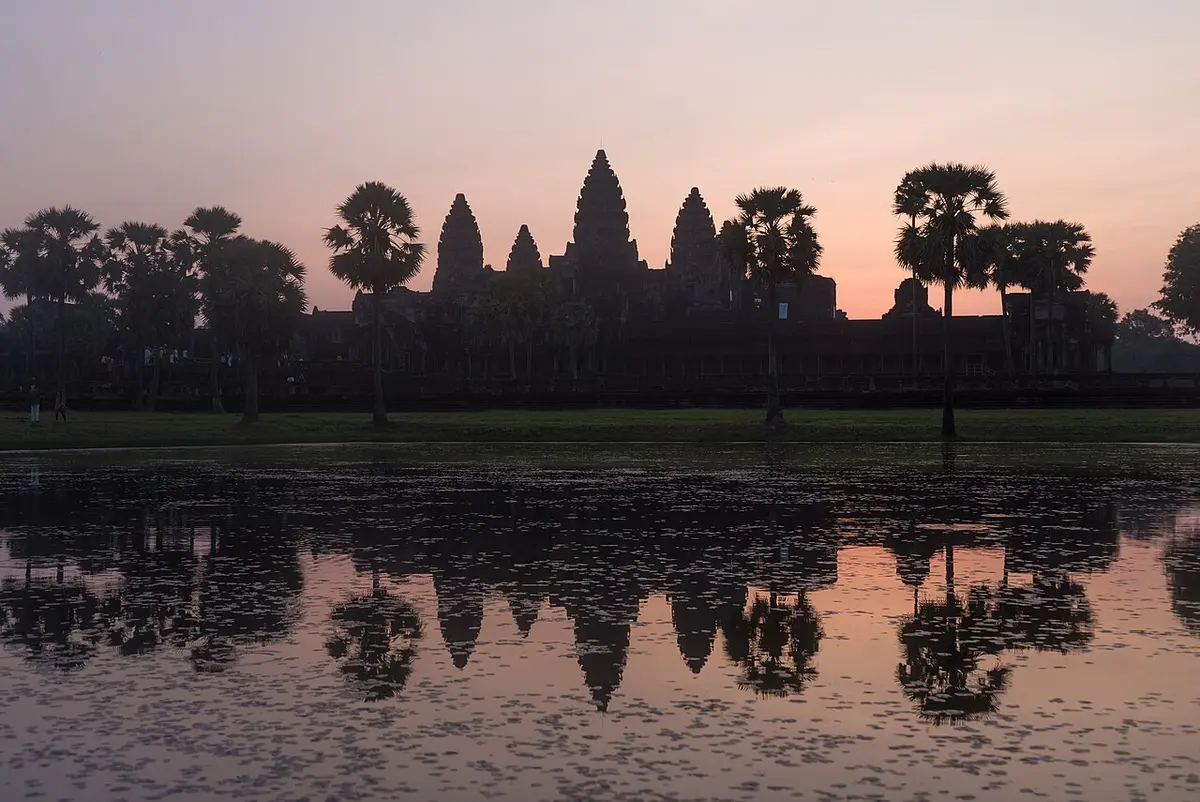
Entry to Angkor Wat opens before dawn, so a popular plan is sunrise by the moat, then exploring inside. Agree the tuk-tuk route and fare the day before so the early start is stress-free; ride-hailing apps fix the fare in advance, so no haggling.
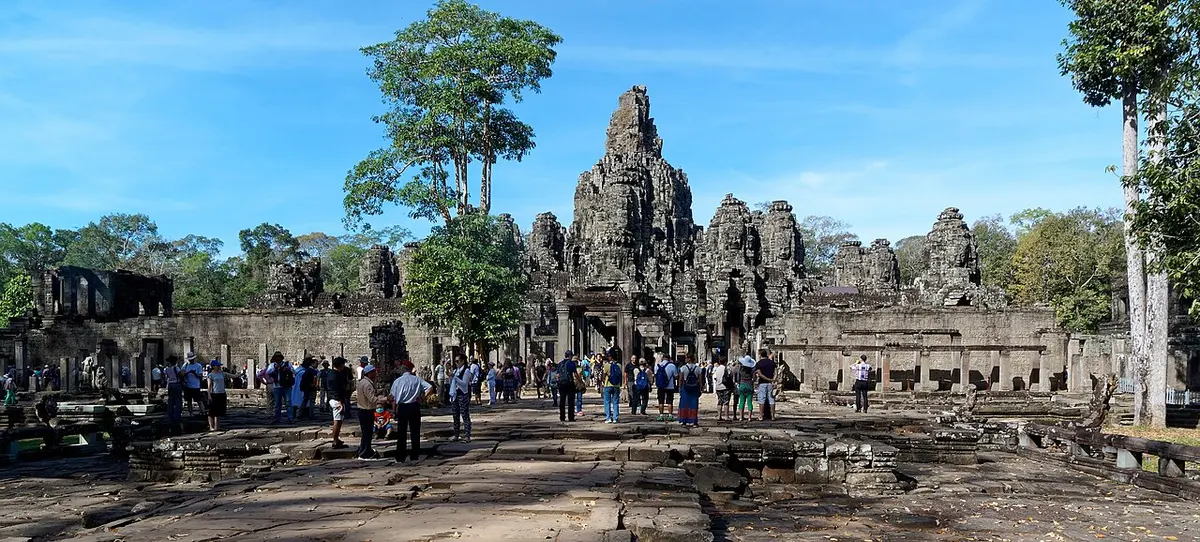
Next, head into the walled city of Angkor Thom for the Bayon and its carved stone faces; the earlier you go, the fewer the crowds and the less the heat. Rest at your hotel through midday, visit Ta Prohm in the afternoon, then watch sunset from hilltop Phnom Bakheng. There's an uphill walk, so leave in good time.
Days 3 and 4: outlying temples and Tonle Sap
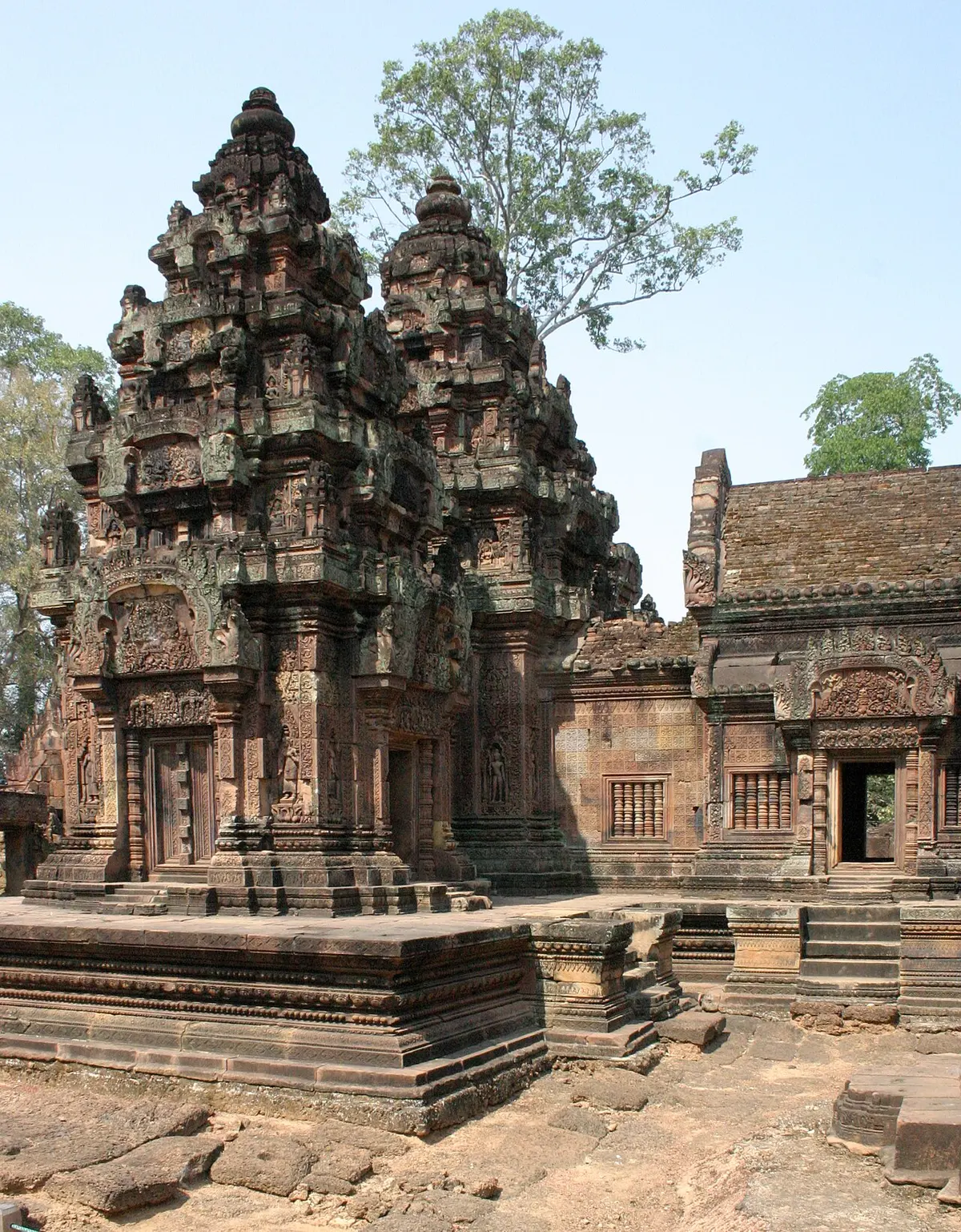
On day 3, hire a car to Banteay Srei and Kbal Spean. Banteay Srei is a 10th-century temple famed for its fine carving, and at Kbal Spean lingas are carved into the riverbed. It's a long way, so an air-conditioned car helps; be back by late afternoon for a riverside walk.
On the morning of day 4, tour a floating village on Tonle Sap lake by boat. At Chong Kneas you buy boat tickets at the official office at the pier; Kampong Khleang is about 45 km from town. Check fares officially, and leave plenty of time to reach the airport on departure day.
When to go, budget and pre-trip checks
The rainy season usually starts around May and brings frequent rain into the autumn, followed by a dry season that lasts until the next spring. The turn of the year is relatively cool within the dry season, good for temple walking. Season start dates vary each year, so check the local forecast before you go.
Excluding the Angkor pass, allow about US$30-45 per day on a budget (guesthouse, local food, tuk-tuks) or about US$80-130 with a mid-range hotel and tuk-tuk hire. The riel is Cambodia's currency, but US dollars are commonly used in towns and tourist areas; carry small notes for markets and tuk-tuks.
Cambodian entry and visa rules can change, so check official sources, including the official e-visa site (evisa.gov.kh), before you travel. Also check your government's travel advice for Cambodia, and turn down too-good-to-be-true offers from strangers, such as overseas job offers.
Plan your Siem Reap trip
We never take payment — compare, then book on the official partner site.
Services mentioned in this article
Affiliate links. You book on each company’s official site — OneWorld never takes payment.
FAQ
Where do I buy an Angkor pass?
At the official ticket counter or on the official website/app (angkorenterprise.gov.kh). Check pass types and prices there before buying.
Do I have to use a 3-day pass on consecutive days?
No. A 3-day pass can be used within 7 days, and a 7-day pass within 30 days.
Can I wear shorts?
Shorts and skirts above the knee and bare shoulders are prohibited in the temples. Bring light long clothing or a scarf.
Is the Angkor Wat sunrise worth it?
It's optional but the most popular plan. Entry opens before dawn, so arrange your tuk-tuk and pass the day before.
Related reading
 TipsTraveling Southeast Asia in the Rainy Season: When It Rains Where, and What to PackRainy seasons differ by country and even by coast. Here's when it rains in Bangkok,…
 SafetyHow to Avoid Taxi Scams Abroad: Riding Taxis and Ride-Hailing Apps SafelyHow to avoid overcharging, detours and change tricks at airports and tourist spots, use…
 TipsTravel Insurance Checklist: Coverage That Matters, Exclusions and How to ClaimDo you need travel insurance? What coverage matters most, how to read the exclusions,…