Comparison · Japan
Kyoto vs Nara: Which Should You Choose for a First Trip?
Kyoto, capital for over a thousand years, or Nara, home of the deer and the Great Buddha? Transfers, days, budgets, same-month weather and sights compared.

Published
The short answer
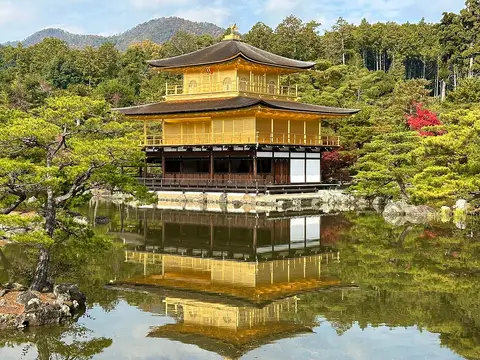
Kyoto was Japan's capital for over a thousand years. Its sights are spread across the city: Fushimi Inari Taisha with its red torii gates, Kiyomizu-dera with its wooden stage over the hillside, the gold-leaf Kinkaku-ji, the Arashiyama Bamboo Grove and the old teahouse streets of Gion. The guide suggests 3 to 4 days.
Nara was Japan's capital (Heijo-kyo) from 710 to 794. Todai-ji's Great Buddha, Kasuga-taisha and Nara Park, home to about 1,300 deer, are close together, and eight sites were listed as UNESCO World Heritage in December 1998 as the Historic Monuments of Ancient Nara. The guide suggests a day trip to 2 days.
Best for: Kyoto suits travelers who want several days of temples, shrines and old streets, with evenings out in the busy center. Nara suits travelers who want to see the deer park, the Great Buddha and old shrines on foot in one go, or add an ancient capital to a short trip.

Getting there: from Kansai Airport and between the two
Neither Kyoto nor Nara has an airport, so you arrive at Kansai Airport (KIX). For Kyoto, the easiest option is the limited express train to Kyoto Station with no change; for Nara, the airport limousine bus run by Nara Kotsu goes to JR Nara Station with no change. You can also reach both by train via Osaka.
The two cities are close by train: about 35 minutes from Kintetsu Kyoto Station to Kintetsu-Nara by limited express (surcharge needed), or about 45 minutes from JR Kyoto Station by the JR Miyakoji Rapid. There is no direct bus between Nara and Osaka or Kyoto. Check official transport information for fares and timetables.
- Kyoto limited express: Kansai Airport to Kyoto Station about 1 hr 20 min, about 2,000-3,600 yen depending on the ticket
- Kyoto airport limousine bus: to Kyoto Station about 1 hr 30 min, about 2,500-3,000 yen (traffic can cause delays)
- Kyoto by train via Osaka: about 1 hr 40 min-2 hr (check official fares)
- Nara airport limousine bus: to JR Nara Station about 100–120 min, JPY 2,400 adult, JPY 1,200 child (one way; tickets sold at the airport)
- Nara via Osaka: about 40 min from Osaka Namba to Kintetsu-Nara, or about 36 min from JR Tennoji to Nara (check official information for the airport-to-Osaka leg)
How many days and what budget
The guides suggest 3 to 4 days for Kyoto and a day trip to 2 days for Nara. Kyoto's route covers Fushimi Inari, Kiyomizu-dera and Gion on the first day, Arashiyama, Kinkaku-ji and Nishiki Market on the second, and Nijo Castle, the Philosopher's Path and Ginkaku-ji on the third. Nara's route covers Kofuku-ji, Nara Park, Todai-ji's Great Buddha Hall and Nigatsu-do on the first day, then Kasuga-taisha early in the morning, Isuien Garden and Naramachi on the second.
Where to stay differs too. Kyoto offers the area around Kyoto Station for transport, Shijo Kawaramachi and Gion for evenings out, the quieter area around Karasuma Oike, and Arashiyama for nature (about 30 minutes by train from the center). In Nara, the area around Kintetsu-Nara Station is about 8 minutes' walk from Nara Park, and the area around JR Nara Station is where the airport limousine bus stops.
The guides also give budgets differently. The Kyoto guide lists daily budgets per person by level, while the Nara guide gives example transport and entry costs instead of a daily total and says hotel and food costs vary by date, so check booking sites. That makes it hard to say which city is cheaper.
- Kyoto budget: about 8,000-10,000 yen per day (guesthouse, buses, simple meals)
- Kyoto mid-range: about 18,000-25,000 yen per day (hotel, entry fees, restaurant meals)
- Kyoto high-end: about 40,000 yen+ per day (ryokan, kaiseki dinner, taxis)
- Nara transport: bus 1-Day Pass JPY 600 adult; airport limousine bus JPY 2,400 one way
- Nara entry fee examples: Todai-ji Great Buddha Hall JPY 800, Kofuku-ji three-site ticket JPY 1,600, Isuien JPY 1,200, Kasuga-taisha special worship JPY 700 (Nara Park and Kasuga-taisha's main worship area are free)
Weather by month, side by side
The Kyoto guide names late March to early April (cherry blossoms) and mid-November to early December (autumn colors) as the most beautiful times, though extremely crowded and with higher hotel prices. The Nara guide highlights cherry trees along the Saho River in spring, the Nara Light-Up Promenade (July–September) and Nara Tokae in August, autumn leaves in Nara Park, and Mount Wakakusa Yamayaki on the fourth Saturday of January. So we set April, August, November and January side by side.
The figures are 1991–2020 normals from the Japan Meteorological Agency: Kyoto station for Kyoto and Nara station for Nara. Each line shows average high / average low / monthly precipitation.
In all four months the two cities' temperatures are almost the same, and Nara gets a little less rain than Kyoto. In August highs reach 34°C in Kyoto and 33°C in Nara, and in January lows drop to 2°C in Kyoto and 1°C in Nara.
The Kyoto guide calls June-July the rainy season and July-August very hot and humid, and says winter is cold but quieter. The Nara guide says the park is crowded in autumn leaf season and male deer can be aggressive in autumn. Autumn-leaf timing changes every year, so check the official autumn-leaf forecast before you go, and the weather forecast just before you leave.
- April: Kyoto 20°C / 9°C / 117 mm, Nara 20°C / 9°C / 99 mm
- August: Kyoto 34°C / 25°C / 154 mm, Nara 33°C / 24°C / 128 mm
- November: Kyoto 17°C / 8°C / 74 mm, Nara 17°C / 7°C / 71 mm
- January: Kyoto 9°C / 2°C / 53 mm, Nara 9°C / 1°C / 52 mm
What you do there: sights, food and getting around
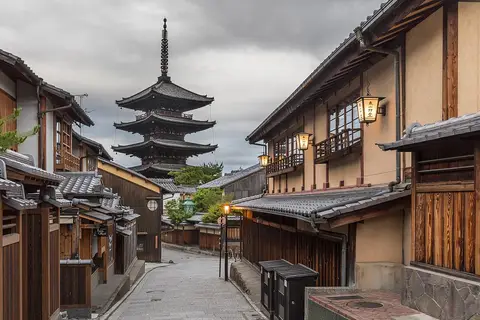
Kyoto's big sights are spread around the city. Fushimi Inari Taisha, with thousands of red torii gates winding up the mountain, is free; go early in the morning for fewer people. Combine Kiyomizu-dera with the old Sannenzaka and Ninenzaka lanes, and the Philosopher's Path with nearby Ginkaku-ji. Kinkaku-ji and Nijo Castle charge entry, and the Arashiyama Bamboo Grove is very crowded by midday. Some lanes in Gion are private, with no entry or photography.
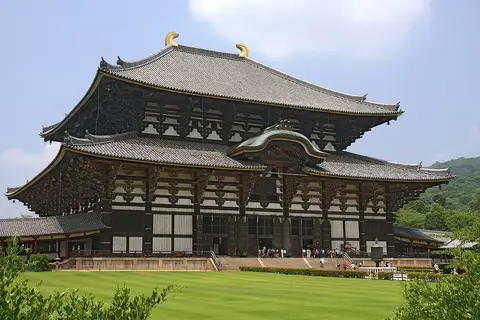
Nara's center is compact enough to walk: Nara Park is about 8 minutes on foot from Kintetsu-Nara Station, and Todai-ji and Isuien about 15 minutes. Wild deer, a national natural monument, roam the park of about 660 hectares, and Todai-ji's Great Buddha Hall is considered the largest wooden structure in the world. Kasuga-taisha, founded in 768, is known for its 3,000 donated lanterns, and Naramachi is lined with old machiya townhouses. As checked on 5 October 2026, Kofuku-ji's five-storied pagoda is under construction work.
The food differs too. Kyoto is known for yudofu (set meals near temples about 2,000-4,000 yen), obanzai, nishin soba and matcha desserts. Nara has kakinoha-zushi (pressed sushi wrapped in a persimmon leaf), narazuke pickles aged in sake lees, and cha-gayu, rice porridge cooked in hojicha.


- Kyoto transport: city buses reach nearly every temple and shrine but get very crowded in peak season. Mixing the subway (Karasuma and Tozai lines) with JR and private railways is faster.
- Nara transport: loop buses run frequently from JR Nara and Kintetsu-Nara stations to Nara Park and the main sights. The bus 1-Day Pass is JPY 600 adult.
- Feed the deer in Nara Park only deer crackers (10 for JPY 200 as of 2024). There are no trash bins in the park, so take all your trash with you.
How to choose: one city or both
If you want several days of temples, shrines and old streets, with the busy center in the evening, Kyoto fits well. If you want to see the deer park, the Great Buddha and old shrines on foot in a day or two, Nara fits well.
You can also do both. Stay in Kyoto and visit Nara as a day trip by train, or spend a night in Nara and see Kasuga-taisha early in the morning, as in the guide's route. To get from Nara to the airport, take the airport limousine bus from JR Nara Station or go by train via Osaka.
Check official Japanese government information on entry procedures before you travel.
- Many Kyoto temples close around 5 pm; check official opening times and visit the big sights in the morning
- Kyoto charges a separate accommodation tax; check your booking and official information for the amount
- Kofuku-ji admission and some small shops and temple ticket counters in Kyoto are cash only, so carry some yen
- Nara's deer are wild animals: don't tease them by pretending to feed them, and watch maps and plastic bags
- The Nara City Tourist Information Center in front of JR Nara Station's East Exit offers temporary baggage storage
Plan your Kyoto trip
We never take payment — compare, then book on the official partner site.
Plan your Nara trip
We never take payment — compare, then book on the official partner site.
FAQ
Kyoto or Nara for a first visit?
The guides suggest 3 to 4 days for Kyoto and a day trip to 2 days for Nara. If you have several days, you can base yourself in Kyoto and visit Nara as a day trip by train.
How long does it take from Kyoto to Nara?
About 35 minutes from Kintetsu Kyoto Station to Kintetsu-Nara by limited express (surcharge needed), or about 45 minutes from JR Kyoto Station by the JR Miyakoji Rapid. There is no direct bus between the two cities.
Which one costs more?
The Kyoto guide's mid-range daily budget is about 18,000-25,000 yen per person. The Nara guide lists entry fees (such as JPY 800 for Todai-ji's Great Buddha Hall) and transport instead of a daily total, and says accommodation is most of the budget, so compare prices for your dates on booking sites.
When is the best time to go?
Kyoto is loveliest in late March to early April (cherry blossoms) and mid-November to early December (autumn colors); Nara has spring cherry trees, autumn leaves and summer light-up events. Same-month normals show almost the same temperatures in both cities.
Related reading
 Itinerary · JapanNara day trip from Osaka or KyotoKintetsu and JR travel times from Osaka and Kyoto to Nara, a walking day route via…
 Comparison · JapanKansai Airport (KIX) to Kyoto and Nara: Train, Bus or via OsakaKyoto and Nara have no airport. From Kansai Airport (KIX): times and fares for the train…
 Itinerary · JapanOne Day in Kyoto: Where Should You Start?One day in Kyoto? Pick the east side (Kiyomizu-dera, Gion) or the west (Arashiyama,…