Itinerary · Malaysia
How Many Days in Kuala Lumpur? A 4-Day Route and How to Get Around
A day-by-day 4-day Kuala Lumpur route: airport express to KL Sentral, the Twin Towers at night, Batu Caves, the National Mosque, Merdeka Square and KL Tower.

Published
The big picture: four days, one area at a time
Four days suits Kuala Lumpur well. Skyscrapers like the Petronas Twin Towers sit alongside mosques and Chinese and Indian neighborhoods, so grouping nearby sights day by day keeps travel time short.
This plan follows the guide's four-day route. Day 1 takes the airport express to KL Sentral, then the Twin Towers lit up from KLCC Park; Day 2 covers Batu Caves, the Islamic Arts Museum and the National Mosque, with dinner on Jalan Alor; Day 3 Merdeka Square, Central Market and Chinatown, KL Tower and Bukit Bintang at night; Day 4 is a nasi lemak breakfast and souvenirs before heading to the airport.
For a first visit, Bukit Bintang is the easiest base, with malls, restaurants and food streets close to monorail stations. KLCC (around the Twin Towers) suits night views and the park, Chinatown (around Petaling Street) suits value and old streets close to Merdeka Square and Central Market, and KL Sentral, the hub for the airport express and several lines, is handy on airport days. For a local feel there is Bangsar, 15-20 minutes by car from the center.
Day 1: Airport express to KL Sentral, then the Twin Towers from KLCC Park
Kuala Lumpur International Airport (KUL) is a long way south of the city. The airport express train to KL Sentral is the fastest and most reliable option. KL Sentral is where several lines meet, so if you are staying elsewhere, continue by rail from there.
After checking in and resting, head to KLCC Park in the evening. The Petronas Twin Towers, the city's icon, are beautiful from the park after dark. The Skybridge and observation deck may need timed advance booking, so check official information first if you want to go up.
- Airport express to KL Sentral: about 30-35 min, about 55 MYR (check official)
- Airport bus to KL Sentral: about 1 hr to 1 hr 20 min depending on traffic, about 15-20 MYR. Slower, but easy with luggage
- Ride-hailing app to the city: about 50-70 min, about 70-110 MYR. The fare is shown in the app upfront, and it is easiest with family or lots of luggage
Day 2: Batu Caves, Islamic Arts Museum and National Mosque, Jalan Alor
Go to Batu Caves in the morning, before the heat. It is reachable by train from the city: climb the colorful stairs to a Hindu temple inside limestone caves. Cover knees and shoulders, and keep food away from the monkeys.
In the afternoon, pair the Islamic Arts Museum with the National Mosque. The museum shows crafts, architecture and calligraphy from across the Islamic world in a beautiful building, and it makes a good stop in the midday heat. The National Mosque has set visiting hours, visits are restricted at prayer times, and you must cover up (robes may be lent at the entrance). Follow signs about removing shoes.
Dinner is on Jalan Alor, Bukit Bintang's evening food street, lined with satay, seafood and tropical-fruit stalls. Satay, marinated grilled skewers dipped in peanut sauce, is everywhere. Check prices before ordering.

Day 3: Merdeka Square, Central Market and Chinatown, KL Tower, Bukit Bintang
Start the morning at Merdeka Square, where the Union Jack was lowered and the Malayan flag first raised at independence on 31 August 1957, surrounded by Moorish-style colonial buildings. Afternoon downpours are common, so keep outdoor sights for the morning.
Close to the square, Central Market and Chinatown offer a crafts and souvenir market next to the Petaling Street stalls. Bargaining is common; watch your belongings.
In the afternoon, go up KL Tower, a hilltop telecom tower with views over the whole city, including the Twin Towers. End the day in Bukit Bintang, where malls, restaurants and food streets stay lively late into the night.

Day 4 and getting around: nasi lemak, souvenirs, airport
Start the last day with nasi lemak, coconut rice with spicy sambal, anchovies, peanuts and egg, Malaysia's national dish and a common breakfast. Roti canai, flaky flatbread dipped in curry, is a cheap breakfast at about 2-5 MYR, and sweet, frothy teh tarik goes well with either.
After souvenir shopping, take the airport express from KL Sentral (about 30-35 min). The airport is far from the city, so leave with time to spare.
For all four days, rail (LRT, MRT and Monorail) is the backbone: lines link KLCC, Bukit Bintang, Chinatown and KL Sentral, and you tap in with a transit card or bank card. An air-conditioned elevated walkway links Bukit Bintang and KLCC, making walking easy even on hot days.
- Ride-hailing app: cheap with upfront fares and widely used by travelers. Expect waits at rainy rush hours
- City buses (GOKL): city-run buses linking the center and major stations; foreign visitors pay about 1 MYR per ride by card. Routes and fares can change, so check official information
Before you go: budget, when to visit and local customs
Per person per day, budget about 200 MYR with guesthouses, street food and rail, about 450-600 MYR with a city hotel, restaurants and an observation deck, and about 1,200 MYR+ with an upscale hotel, fine dining and a private car. Tipping is not required, and many restaurant bills already include service charge and tax, so check first.
Kuala Lumpur is hot and humid all year, with frequent afternoon downpours. Climate normals for Subang station (Kuala Lumpur), 1991–2020, from the Malaysian Meteorological Department (MetMalaysia) submission to the WMO normals collection (NOAA NCEI), give daytime highs of about 32-34°C, lows of about 24-25°C and an average of about 237 mm of rain a month. June–August and January–February tend to be a little drier. Rainfall is lowest in June (about 146 mm) and highest in November (about 356 mm).
Smoke haze from fires in neighboring countries can worsen air quality, usually around late summer to autumn, so check the air quality index and bring a mask if needed. During Ramadan, restaurant hours may change and it is polite to avoid eating and drinking in public in the daytime. Entry rules and procedures such as digital arrival forms can change, so check official information from Malaysia's immigration department or embassy before you travel.
- A little drier: June–August and January–February
- Carry a small umbrella and plan outdoor sights for the morning
- Cover shoulders and knees at mosques and temples, and respect Islamic customs
- Bag snatching from motorbikes can happen on streets; carry your bag on the side away from traffic
Plan your Kuala Lumpur trip
We never take payment — compare, then book on the official partner site.
Full Kuala Lumpur travel guide →
FAQ
How many days do I need in Kuala Lumpur?
Four days works well: the Twin Towers at night on Day 1, Batu Caves and the National Mosque on Day 2, Merdeka Square and KL Tower on Day 3, and breakfast and souvenirs before the airport on Day 4.
How do I get from the airport to the city?
The airport express train to KL Sentral is the fastest and most reliable option, at about 30-35 minutes and about 55 MYR (check official). The cheaper airport bus costs about 15-20 MYR and takes about 1 hr to 1 hr 20 min.
What should I wear to Batu Caves and the National Mosque?
Cover knees and shoulders at Batu Caves. The National Mosque also requires covering up, robes may be lent at the entrance, visiting hours are set and visits are restricted at prayer times.
When is the best time to visit?
It is hot all year with frequent afternoon downpours. June–August and January–February tend to be a little drier. Restaurant hours may change during Ramadan.
Related reading
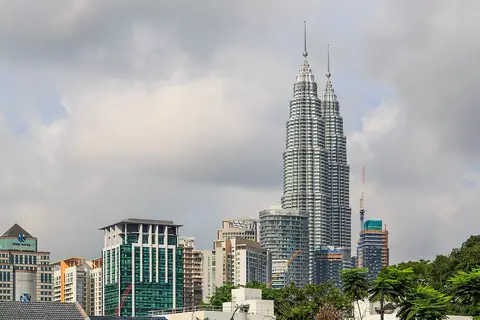 Comparison · SingaporeSingapore vs Kuala Lumpur: A Tidy City-State or a Lively Capital?Planning a Southeast Asian city break — Singapore or Kuala Lumpur? We compare the feel,…
 ComparisonAirport to City: Train, Bus, Taxi or Transfer? A Practical ComparisonCompare the five ways to get from the airport into town, with tips for late-night…
 ComparisonPaying Abroad: Cash vs Credit Card vs Travel Money Card — What's Cheapest?How exchange rates and card fees really work abroad, when cash still matters, and how to…