Comparison · Czechia
Prague vs Vienna: Which Should You Choose for a First Trip?
Prague or Vienna for a first trip? We compare the feel, airport-to-city options, trip length, daily budgets, spring and autumn weather and the main sights.

Published
The short answer
Prague is a city of medieval lanes and red roofs where Prague Castle faces the Old Town across the Vltava River. Its sights link up nicely on foot, so it suits travellers who love architecture, history and night views.
Vienna is the former Habsburg capital, where palaces, museums, opera and coffee-house culture line the old town and the Ringstrasse. It is a great fit for lovers of classical music, art and unhurried café afternoons.
The Prague guide suggests 4 to 5 days and the Vienna guide 3 to 4 nights, and both name spring (April-June) and autumn (September-October) as the most pleasant time for walking. So choose by what you want to see rather than by season.

- Prague suits: travellers who want to walk between lanes, bridges and the castle, and night-view lovers
- Vienna suits: travellers who want palaces and museums, opera and time in coffee houses
From the airport to the city
At Prague's Václav Havel Airport (PRG), the Airport Express (AE) bus runs directly to Prague Main Railway Station (Hlavní nádraží, metro C). Regular public transport tickets are not valid, so buy the AE ticket at the Visitor Centre in the arrival halls or from the driver. Bus 59 with metro line A, or bus 100 with metro line B, works with a regular PID 90-minute ticket. For the official airport taxi, book via the app, a kiosk or a counter and give the driver your six-digit PIN; check fares officially.
At Vienna Airport (VIE), the ÖBB Railjet runs to Wien Hauptbahnhof (main station). During the S-Bahn trunk line works (7 September 2026 to the end of October 2027, planned), premium buses replace the CAT train to Wien Mitte, and the S7 runs only between the airport and Wien St. Marx, where you change to trams 18 or 71. The Railjet keeps running normally during the works.
Because Vienna's services have changed during the works, check ÖBB and Vienna Airport official notices before you travel. Check routes, connections and schedules for both cities with the airlines.
- Prague AE bus: about 33-40 min to the main station, about CZK 200
- Prague bus 59 (about 15-17 min) or bus 100 (about 16-18 min) plus metro: about CZK 46-50 (90-minute ticket)
- Vienna Railjet: about 15 min to Hauptbahnhof, from about €4.10 incl. Vienna public transport
- Vienna CAT (premium bus during the works): about 21 min to Wien Mitte, about €15 one way
- Vienna Airport Bus: VAB2 about 20 min to Morzinplatz/Schwedenplatz, VAB1 about 40 min to Westbahnhof, about €11 one way
How many days and how much — the guides' figures
The Prague guide suggests 4 to 5 days and the Vienna guide 3 to 4 nights. Following each guide's 4-day plan, Prague goes Old Town Square and Charles Bridge → Prague Castle, Malá Strana and Petřín Hill → the Jewish Quarter, New Town and a Vltava cruise → Vyšehrad and Vinohrady. Vienna goes St. Stephen's Cathedral and Opera standing room → the Hofburg and the Kunsthistorisches Museum → Schönbrunn Palace, the Naschmarkt and the Belvedere → the Prater and a Heuriger.
The currencies differ (koruna in Prague, euro in Vienna), so rather than comparing the figures directly, use each guide's daily budget as your reference.
Transport tickets differ too. Prague uses time-based PID tickets (30 min, 90 min, 24 h, 72 h) valid across metro, trams and buses. In Vienna a single is about €3-3.20, a 24-hour ticket about €10.20 and a 7-day ticket about €25-29. Vienna's 48- and 72-hour tickets were discontinued in January 2026, and city tickets do not cover the airport leg, which needs a separate ticket.
- Prague low: about CZK 1,500-2,500 per day (hostel, pubs and supermarket meals, public transport)
- Prague mid: about CZK 4,000-6,000 per day (mid-range hotel, restaurants, one or two paid sights)
- Prague high: about CZK 10,000+ per day (upscale hotel, guided tours, taxis)
- Vienna low: about €80-110 per day (hostels, sausage stands and market food, public transport)
- Vienna mid: about €180-260 per day (mid-range hotel, restaurant meals, one or two paid sights)
- Vienna high: about €450+ per day (luxury hotel, fine dining, opera seats)
Weather side by side — spring (April-June) and autumn (September-October)
Put the guides' best walking months side by side using climate normals, and temperatures are close in each month. Vienna gets more rain than Prague in all five months.
In both cities, May and June are wetter than the yearly average, and June is the wettest month of the year. April and October are below the yearly average in both. September is below average in Prague but above average in Vienna.
Winter is cold in both, with January at about 4°C by day and 0°C at night. In return, Prague has Christmas markets during Advent on Old Town Square, Wenceslas Square and other squares, and Vienna's squares fill with Christmas markets from mid-November until Christmas. January-February is the peak of Vienna's ball season. Summer is busy in both cities, and July highs reach 27°C in each.
Climate figures: 1991–2020 normals from the Czech Hydrometeorological Institute (CHMI / ČHMÚ), Praha, Klementinum station, for Prague, and from GeoSphere Austria (Federal Institute for Geology, Geophysics, Climatology and Meteorology), Wien Innere Stadt station, for Vienna.
- April: Prague high 16°C, low 7°C, rain 25 mm / Vienna high 17°C, low 9°C, rain 40 mm
- May: Prague 21°C, 11°C, 58 mm / Vienna 21°C, 12°C, 78 mm
- June: Prague 24°C, 15°C, 69 mm / Vienna 26°C, 16°C, 82 mm
- September: Prague 20°C, 13°C, 34 mm / Vienna 22°C, 14°C, 67 mm
- October: Prague 14°C, 8°C, 30 mm / Vienna 15°C, 9°C, 48 mm
What you do there — top sights and where to stay
Prague is a city you connect on foot. The core is Prague Castle (St. Vitus Cathedral, the Old Royal Palace, Golden Lane), Charles Bridge lined with thirty statues, and the Astronomical Clock on Old Town Square, where the twelve apostles appear on the hour. There is also Petřín Hill, reached by the funicular that resumed service with new cars on 22 September 2026, Vyšehrad with fewer crowds, and Vltava river cruises. The Jewish Museum is closed on Saturdays and Jewish holidays.
Vienna is a city of palaces and museums. The highlights are St. Stephen's Cathedral, the Hofburg and Sisi Museum, Schönbrunn Palace (the Habsburgs' summer palace), the Upper Belvedere with Klimt's The Kiss, and the Kunsthistorisches Museum with the Habsburg collections including Bruegel and Velázquez (open Tuesday to Sunday, so avoid Mondays). Opera standing tickets are sold only on the day of the performance for about €13-18, and the Prater has the Giant Ferris Wheel built in 1897. The Naschmarkt market is closed on Sundays.
The food differs too. The Prague guide features svíčková, goulash, roast duck and Czech beer; the Vienna guide features Wiener Schnitzel, Tafelspitz, Sachertorte, coffee-house culture and Heuriger wine taverns.


- Where to stay in Prague: Old Town for first-timers, Malá Strana for atmosphere, New Town (Wenceslas Square) for transport, Vinohrady for quieter stays
- Where to stay in Vienna: Innere Stadt (1st district) for first-timers, Neubau & Mariahilf (6th/7th) for museums and shopping, Wieden (4th) for the market and easy access to the Opera and Belvedere, around Hauptbahnhof (10th) for airport and rail links
How to choose, and what to check before you go
If you want to walk medieval lanes, bridges and the castle and enjoy riverside night views, choose Prague. If you want palaces, museums, opera standing room and time in coffee houses, choose Vienna. The guides' best seasons are the same, so decide first what you want to see.
Check official information for entry requirements before you travel. Both guides advise checking the official EU website for the EU Entry/Exit System (EES) and the current status of ETIAS, and checking your government's current travel advice.
- Prague: pickpocketing is common at Prague Castle, Charles Bridge, Old Town Square and on crowded trams and metro, so keep valuables in front of you
- Prague: some exchange offices advertising no commission still charge heavy fees, so use banks, ATMs or card payments
- Prague: book taxis by app or phone, make sure the meter is on and ask for a receipt
- Vienna: most shops close on Sundays and public holidays, so shop on weekdays or Saturdays
- Vienna: tipping about 10% in restaurants and coffee houses is customary but not obligatory (Vienna Tourist Board)
- Both cities: always validate paper tickets when you first ride
Plan your Prague trip
We never take payment — compare, then book on the official partner site.
Plan your Vienna trip
We never take payment — compare, then book on the official partner site.
FAQ
Prague or Vienna for a first visit?
Choose Prague to walk between the castle, bridges and Old Town, or Vienna for palaces, museums, opera and coffee-house culture. The Prague guide suggests 4 to 5 days and the Vienna guide 3 to 4 nights.
Which is cheaper?
The currencies differ, so the guides' figures are hard to compare directly. The mid-range daily budget is about CZK 4,000-6,000 in Prague and about €180-260 in Vienna, so compare at the exchange rate when you travel.
Which months are best?
Both guides name spring (April-June) and autumn (September-October). By the climate normals, June is the wettest month in both cities, while April and October are below the yearly average in both.
How do I get from Vienna Airport to the city right now?
From 7 September 2026 to the end of October 2027 (planned), works mean the CAT runs as a premium bus and the S7 goes only to Wien St. Marx. The Railjet runs normally to Hauptbahnhof in about 15 minutes. Check ÖBB and Vienna Airport official notices before you go.
Related reading
 Itinerary · CzechiaFirst time in Prague: airport to city, and how many days do you need?How many days Prague needs (4 to 5), the airport to the city by AE bus (about CZK 200)…
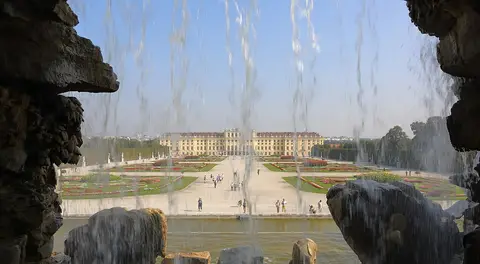 Itinerary · AustriaFirst time in Vienna: airport to city, and how many days do you need?How many days Vienna needs (3 to 4 nights), airport to city by Railjet (from about…
 Comparison · United StatesNew York's Three Airports, JFK vs Newark (EWR) vs LaGuardia (LGA): Where to Land and How to Get Into the CityJFK, Newark (EWR) and LaGuardia (LGA) each get you into Manhattan a different way. We…