Tips · South Korea
Which month is best for Jeonju? Monthly highs, lows and rain from the climate normals, and the Hanok Village
April-May and October suit walks in the Hanok Village, and October is the driest of the three. Summer lotus, autumn ginkgo. KMA normals, 1991–2020.

Published
Short answer: April-May and October for walking, summer for lotus, autumn for ginkgo
Korea Tourism Organization notes the lotus flowers at Deokjin Park's pond in summer and Jeonju Hyanggyo's 400-year-old ginkgo tree, at its most beautiful in fall. A Jeonju trip is mostly walking the sights around the Hanok Village, so it helps to look at temperature and rain too.
By the normals, average highs are about 19.7°C in April, about 25°C in May and about 21.7°C in October, with rainfall of about 78.4 mm, about 82.8 mm and about 57.3 mm. Of these three walking months, October gets the least rain. July and August are the hottest and wettest, with average highs of about 30.6°C and about 31.3°C and about 302.8 mm and about 289.6 mm of rain.
- Good walking months: April, May, October (October has the least rain)
- Summer: lotus at Deokjin Park (Korea Tourism Organization)
- Autumn: Jeonju Hyanggyo's 400-year-old ginkgo (Korea Tourism Organization)
- Wettest month: July (about 302.8 mm)
- Hottest month: August (average high about 31.3°C)
Which numbers we used
The temperatures and rainfall here are the Korea Meteorological Administration 30-year normals for 1991–2020 at Jeonju (Wansan) station: average high, average low and monthly rainfall. Temperatures are in °C and rainfall in mm.
Normals are long-term averages, so they don't tell you this year's weather. The guide also says to check weather and event dates on official sites before you go.
January-June normals
Korea Meteorological Administration, 1991–2020, Jeonju (Wansan) station. Each line shows average high / average low / rainfall. January is the coldest month, with an average low of about -4.3°C, and the driest, with about 26.9 mm.
- January: high about 4.8°C / low about -4.3°C / about 26.9 mm
- February: high about 7.5°C / low about -2.8°C / about 36.8 mm
- March: high about 13°C / low about 1.4°C / about 53.7 mm
- April: high about 19.7°C / low about 6.9°C / about 78.4 mm
- May: high about 25°C / low about 12.7°C / about 82.8 mm
- June: high about 28.4°C / low about 18.2°C / about 159 mm
July-December normals
Same source and period. August is the hottest month, with an average high of about 31.3°C, and July is the wettest, with about 302.8 mm.
- July: high about 30.6°C / low about 22.7°C / about 302.8 mm
- August: high about 31.3°C / low about 22.9°C / about 289.6 mm
- September: high about 27.4°C / low about 17.4°C / about 128.2 mm
- October: high about 21.7°C / low about 10.1°C / about 57.3 mm
- November: high about 14.4°C / low about 3.9°C / about 49.8 mm
- December: high about 7.1°C / low about -2.1°C / about 34 mm
Spring (April-May) and autumn (October): Hanok Village walks and the Hyanggyo ginkgo
With around 700 hanok, Jeonju Hanok Village is Korea's largest and only urban traditional hanok village. Gyeonggijeon Shrine is inside the village and Jaman Mural Village sits on the ridge between Omokdae and Imokdae, so the nearby sights are easy to combine on foot. The climb to Jaman Mural Village is steep, so wear comfortable shoes.
In autumn, visit Jeonju Hyanggyo; its 400-year-old ginkgo tree makes it most beautiful in fall. It is free and closed on Mondays (the next business day if Monday is a public holiday). October has an average high of about 21.7°C, an average low of about 10.1°C and about 57.3 mm of rain.

- April: high about 19.7°C / low about 6.9°C / about 78.4 mm
- May: high about 25°C / low about 12.7°C / about 82.8 mm
- October: high about 21.7°C / low about 10.1°C / about 57.3 mm
- Jeonju Hyanggyo: free, closed Mondays
Summer (June-August): Deokjin Park lotus, but hot and wet
The ㄱ-shaped hanok library Yeonhwajeong stands in the middle of Deokjin Park's lotus pond. Summer lotus flowers are even more beautiful at night. The library opens 10:00–19:00, is closed on Mondays and is free. Take a bus or taxi from the Hanok Village to Deokjin Park.
June-August average highs are about 28.4°C, about 30.6°C and about 31.3°C, with about 159 mm, about 302.8 mm and about 289.6 mm of rain. Gyeonggijeon stays open until 20:00 in June-August (last entry 1 hour before closing), so you can visit after sunset.
- July: high about 30.6°C / low about 22.7°C / about 302.8 mm
- August: high about 31.3°C / low about 22.9°C / about 289.6 mm
- Yeonhwajeong Library: 10:00–19:00, closed Mondays, free
- Gyeonggijeon: open until 20:00 in June-August (last entry 1 hour before)
Winter (December-February) and any month: Gyeonggijeon hours and Jeonju food
December-February get little rain, about 34 mm, about 26.9 mm and about 36.8 mm, but average lows are below freezing at about -2.1°C, about -4.3°C and about -2.8°C. Gyeonggijeon closes at 18:00 in November-February, with last entry 1 hour before, so go early. Admission is KRW 3,000 for adults (25–64), and it is free on the last Wednesday of each month, for ages 6 and under, and for 65 and over.
The Hanok Village is free and open all year. Jeonju is Korea's first UNESCO City of Gastronomy; try Jeonju bibimbap, kongnamul-gukbap, hanjeongsik, kalguksu and Jeonju Choco Pie. Fees and opening hours can change, so check official information.

- January: high about 4.8°C / low about -4.3°C / about 26.9 mm
- Gyeonggijeon: until 18:00 in November-February; 20:00 in June-August, 19:00 otherwise
- Hanok Village: free, open all year
- Food: Jeonju bibimbap, kongnamul-gukbap, hanjeongsik, kalguksu, Jeonju Choco Pie
Plan your Jeonju trip
We never take payment — compare, then book on the official partner site.
FAQ
What is the best month to visit Jeonju?
April-May and October are good for walking, and October gets the least rain of the three, about 57.3 mm (Korea Meteorological Administration, 1991–2020, Jeonju (Wansan) station). Korea Tourism Organization highlights the Deokjin Park lotus in summer and the Jeonju Hyanggyo ginkgo in autumn.
What is the wettest month in Jeonju?
By the normals, July (about 302.8 mm), then August (about 289.6 mm) and June (about 159 mm). The driest is January (about 26.9 mm).
When can I see the lotus at Deokjin Park?
In summer. The hanok library Yeonhwajeong stands in the middle of the lotus pond, and summer lotus flowers are even more beautiful at night. The library opens 10:00–19:00 and is closed on Mondays.
What is Jeonju like in winter?
December-February get little rain, but average lows are below freezing (about -4.3°C in January). Gyeonggijeon closes at 18:00 in November-February, with last entry 1 hour before. The Hanok Village is open all year.
Related reading
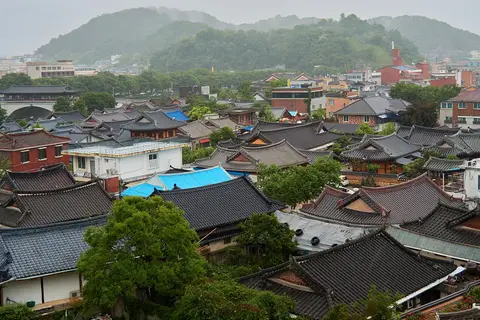 Itinerary · South KoreaOne day in Jeonju Hanok VillageJeonju is about 1 hr 40 min from Yongsan by KTX. Walk Gyeonggijeon, Jeondong Cathedral,…
 Itinerary · South KoreaGyeongju in 2 days by KTX: a Silla history tripGyeongju, the Silla capital, is about 2 hr 10 min from Seoul by KTX. Day 1: walk…
 Tips · South KoreaWhich month is best for Jeju? Monthly highs, lows and rain from the climate normalsApril-June and September-November are best, and April, May, October and November are…